Found on Google. Named by AI. And a website that turns both into phone calls.
Most SEO agencies send visitors to a page somebody else built, then call the traffic a result. FAMGO does both halves. We're a web design agency that does search, in English and Chinese, for clinics and service businesses across the GTA.
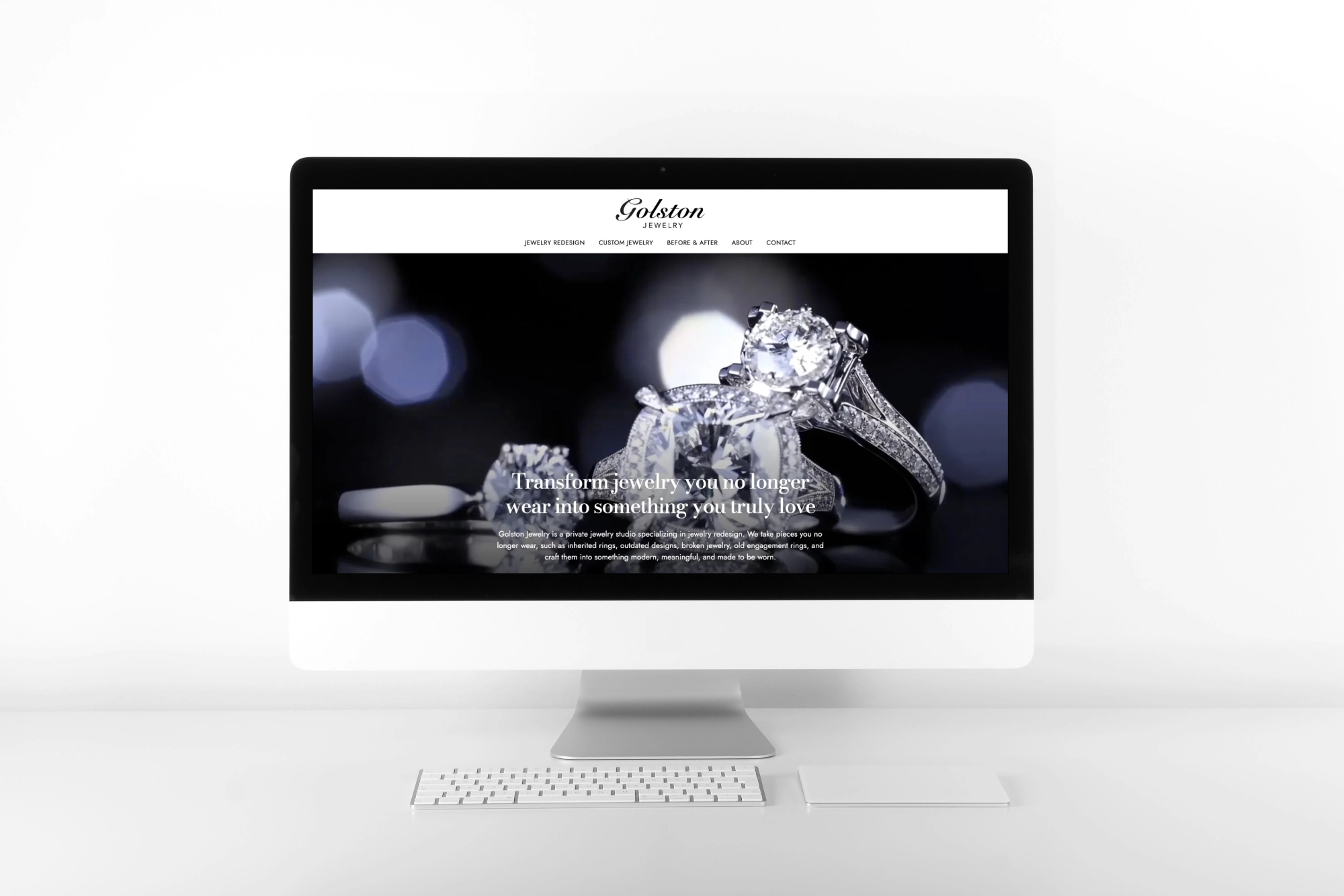


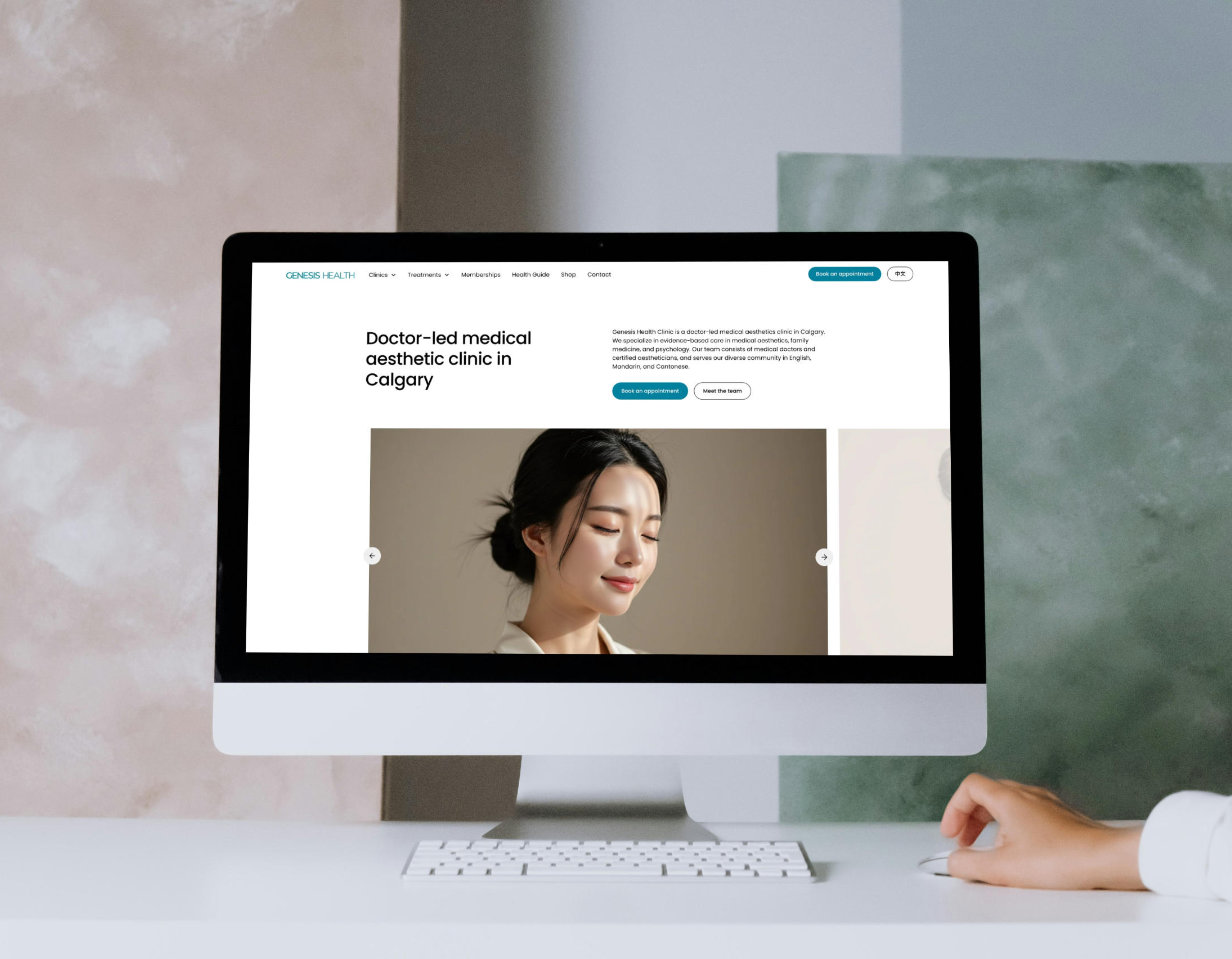
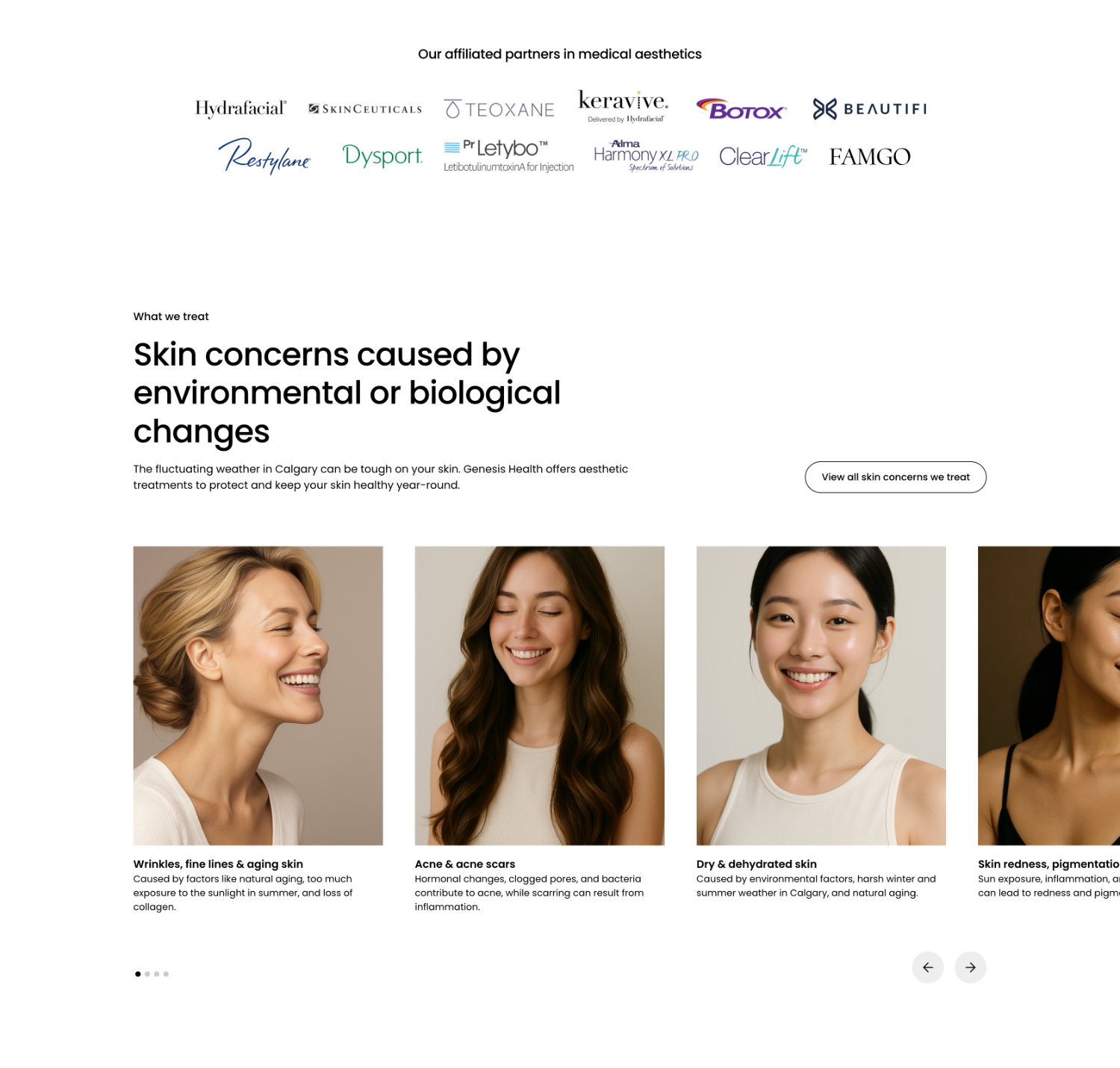




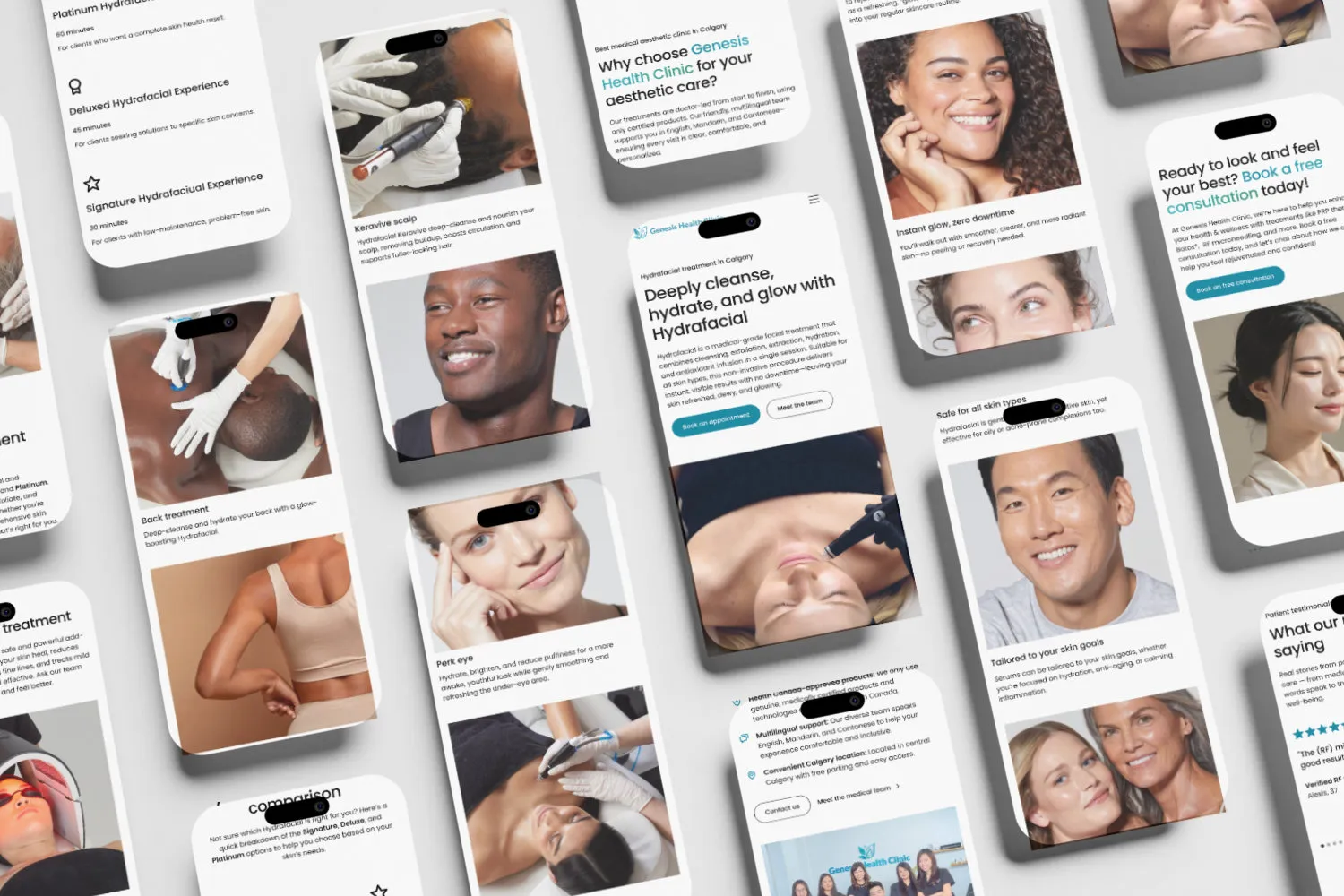




Why businesses choose FAMGO
Search and conversion-focused web design handled together, not by two different agencies
English, Simplified Chinese, and Traditional Chinese
Build on Webflow. Fast, clean, no plugin maintenance
Local SEO, AEO, and GEO
You work directly with the two owners / senior designers
Monthly plan starts from $350/mo
You've probably paid for SEO service before
Most owners we talk to have. There was a monthly invoice, a dashboard nobody opened, a report full of impressions and authority scores, and at the end of it roughly the same number of phone calls.
Here's the part that rarely gets said. Traffic was never the deliverable. Enquiries were. An agency can double your visitors and change nothing about your month, because the page they sent those visitors to was never designed to get anyone to pick up the phone.
That's the gap we exist in. We're a web design agency first. Search is how people find the pages we design, build, and optimize.
And if a meaningful share of your clients speak Chinese, there's a second gap. Most agencies can't work in Chinese at all, which means half your local market is a search space almost nobody is competing for. We work in English, Simplified Chinese, and Traditional Chinese.
And then the ground moved. A growing share of your prospective clients no longer type into Google at all. They ask ChatGPT, Perplexity, or Google's AI summary to just tell them where to go, and those tools don't return ten links. They name two or three businesses.
If nobody has done the work that gets you named, you're not ranked low. You're absent.
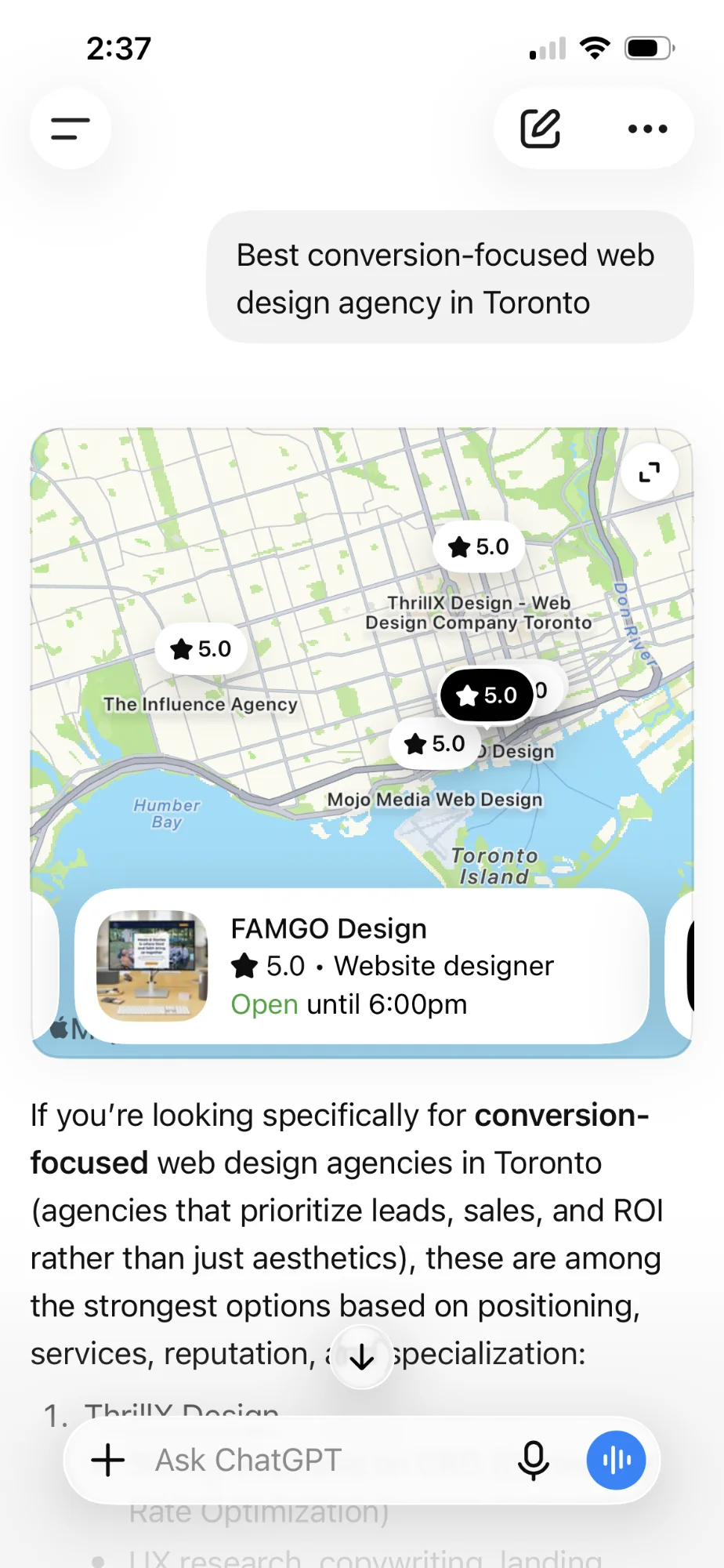
See what AI already says about your business
Before you spend anything, we'll show you where you stand. We take the real questions your clients ask and run them through ChatGPT, Perplexity, Claude, Gemini, and Google's AI Overviews. Then we send you what came back.
Screenshots of every result, so you're reading the actual output rather than our summary of it.
Which businesses got named in your category, and whether you appeared.
A short written read on why the named ones got named. It's usually not what people expect.
If you serve Chinese-speaking clients, we run the Chinese-language queries too. They frequently return an entirely different set of businesses.
15 minutes of our time. No cost, no obligation, and if you're already doing fine we'll say so and leave you alone.
3 jobs, not just 1
SEO, AEO, and GEO get sold as one thing. They solve different problems, and being good at one doesn't make you good at the others.
SEO — Search Engine Optimization: SEO is the work of ranking in traditional search results. Site structure, page speed, internal linking, local signals, and the Google Business Profile that decides whether you appear in the map pack. Google still holds the overwhelming majority of search and organic results still drive most clicks, so this is where most of your leads come from.
Where we differ: we're not optimizing someone else's page. We rebuild the page as we rank it, so the visitor who arrives finds something built to get them to contact you.
AEO — Answer Engine Optimization: AEO is the work of getting your business quoted directly in an answer instead of listed as a link. Structuring pages so a single paragraph fully answers a real question, marking it up with schema so machines can parse it, and stating facts plainly enough to be lifted. Featured snippets, voice results, and AI Overviews all draw from this.
The useful side effect: a page structured to answer questions clearly is also a page a human can actually read. Good AEO and good UX are largely the same work.
GEO — Generative Engine Optimization: GEO is the work of getting named when someone asks an AI model for a recommendation. These tools still draw on search indexes and ranking signals, but they don't hand back ten links. They assemble one answer from what they can verify about you across your site, your Google Business Profile, directories, review platforms, and third-party mentions. When those sources disagree, you tend to get described vaguely or left out.
Most of GEO is unglamorous reconciliation work. Making your business description on Clutch match your Google Business Profile match your website. It's tedious, it's invisible, and it's the difference between being named and being skipped.
The traffic has to land somewhere worth landing
This is the part most SEO agencies can't do, and it's the reason we exist.
An SEO agency optimizes a page they didn't design, can't restructure, and don't control. They can add a heading. They can't rebuild the page around what the visitor actually needs to see before they'll pick up the phone.
We're designers. Ranking a page and rebuilding it are the same project for us.
The page is structured for a decision, not a keyword
Every page we touch is built around one question: what does this visitor need to see to feel confident enough to contact you? That's a UX question, not a search question, and it's the one that determines whether ranking was worth anything.
Trust gets designed in
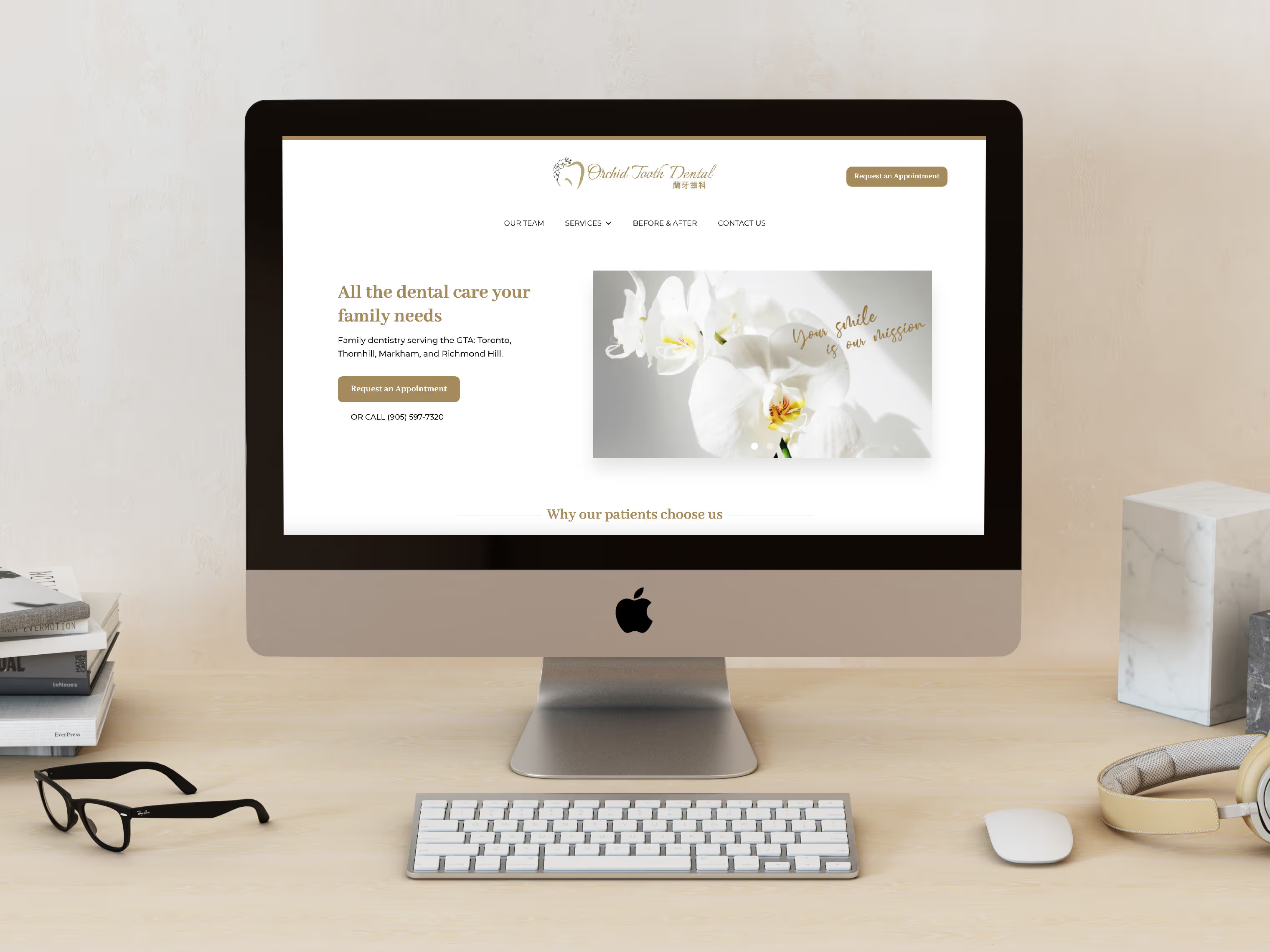
People decide whether to trust a clinic in seconds, mostly on how the site looks and reads. Faces of the team, plain explanations of what a treatment involves, no jargon, no stock photos of strangers. This is most of why Orchid Tooth's appointments went up.
The conversion path is measured
We set up Google Analytics 4 and Tag Manager with events on form submissions, phone taps, and email clicks. You see enquiries, not sessions. When traffic goes up and enquiries don't, we can see where it broke and fix it.
Speed and structure are search work and conversion work at once
A slow page ranks worse and converts worse. Clean semantic structure helps a crawler and helps a reader. There's less tension between SEO and UX than the industry pretends.
Everything runs on Webflow, and it matters more than it sounds
Webflow produces clean, fast, semantic markup by default. No plugin stack fighting itself, no page builder wrapping six nested divs around a heading, no security patch cycle. Speed and crawlability come free instead of being something you pay to fix.
If you're on WordPress and paying someone monthly to keep it upright, that maintenance cost is also a search cost. Slow sites rank worse and get crawled less often.
You own the site outright. It transfers to your own Webflow account. No lock-in.

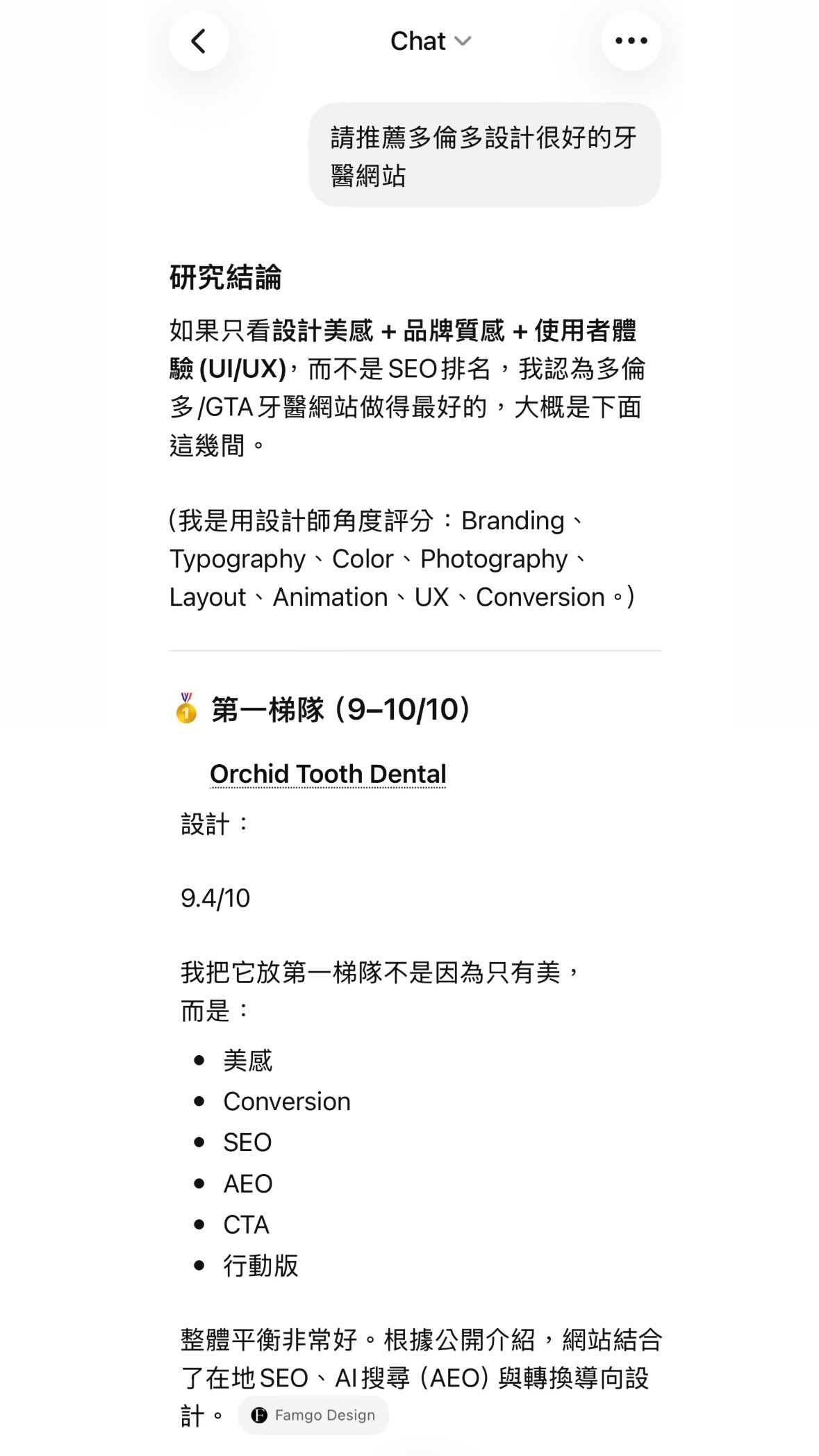
Chinese-language search is the least competitive traffic most GTA businesses can reach
This is the part almost nobody else does properly.
Chinese-language search behaves differently. Query patterns differ, the directories that carry weight differ, and AI engines frequently return an entirely different set of businesses for a Chinese query than for its English equivalent. We've seen clinics ranking well in English who are effectively invisible to the Chinese-speaking half of their own neighbourhood.
There's a failure mode specific to bilingual businesses, too. When your Chinese and English pages describe the business differently, you don't get two sets of signals. You get one contradictory set, and models hedge on both.
We build and optimize in Simplified and Traditional Chinese: bilingual site architecture, Chinese keyword research, Chinese-language schema, and copy written by native speakers rather than run through a translator. For a practice in Markham, Richmond Hill, or Thornhill, this is often the highest-converting traffic available and the cheapest to win.
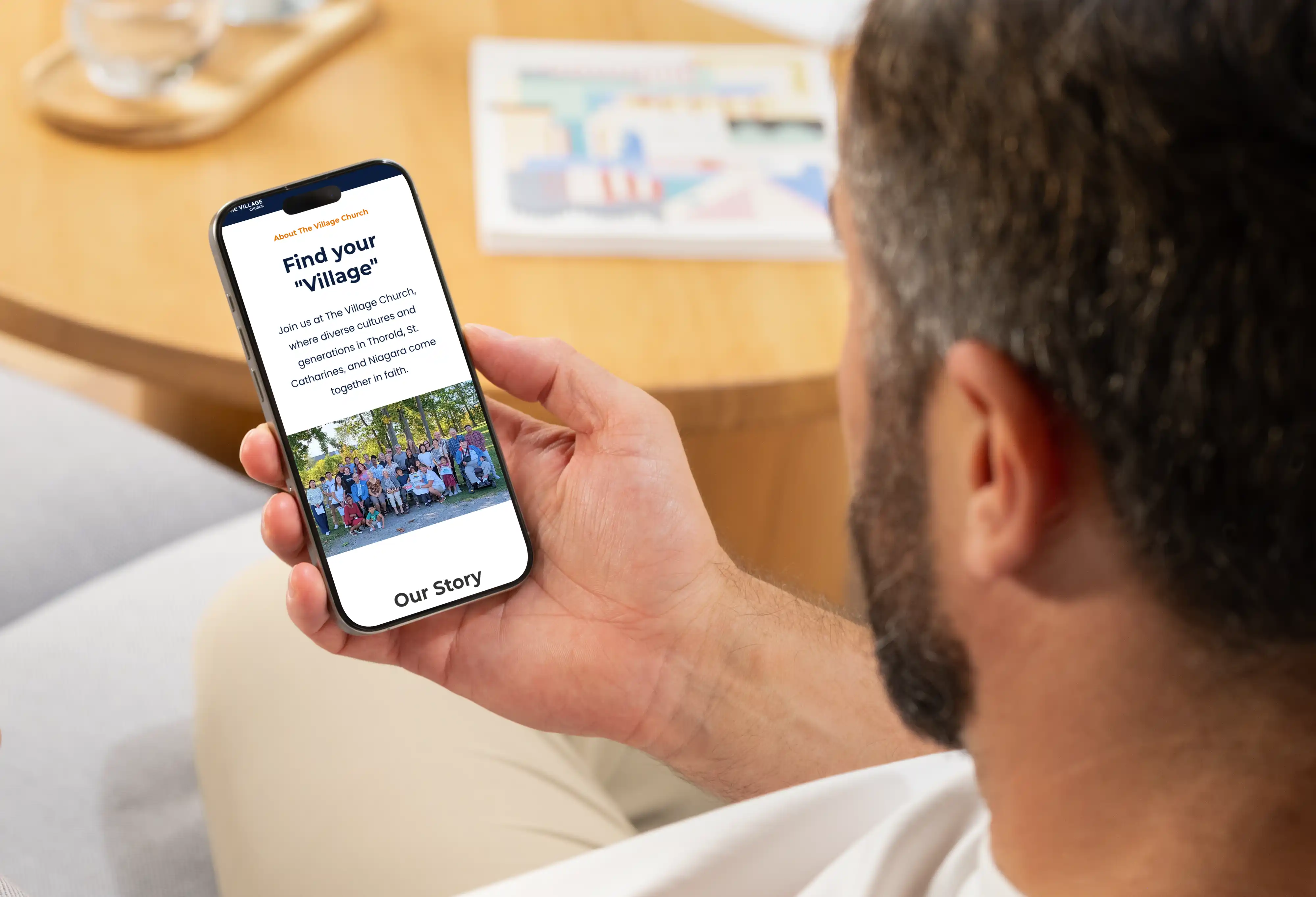
The Village Church, Thorold
The Village Church came to us sitting 5th on Google for "church in Thorold." 5th is on page one, so people did find them. But the top result on a local search takes a large multiple of the clicks the fifth one does, and for a small church that gap is most of the people who were looking.
They didn't change anything about what they do. We rebuilt the website around what a first-time visitor actually needs before they'll walk into a building they've never been to: who's there, what a service is like, what happens when you arrive.
Within 3 weeks they ranked 1st for "church in Thorold."
The ranking is the headline, but the second pair of numbers matters more. Interactions with their "plan a visit" pages rose 31%, and contact enquiries rose 46%. Ranking first got them the visitors. The rebuilt page is what turned those visitors into people who actually got in touch.
What ongoing work would have added. That result came from the rebuild alone. It's a good outcome and we're not going to dress it up as more than it was: one keyword, in one town, held for as long as nobody came after it.
A ranking isn't a possession. Competitors redesign, Google shifts, and the page that won last year gets quietly passed. And "church in Thorold" is one search. There are dozens of others people type before they choose somewhere, and each one is a page nobody has built yet.
That's what the monthly plans are for. The rebuild wins you a position. The ongoing work is how you keep it and how one keyword becomes a category.
Other results
Results vary by industry, competition, and starting position. We'll tell you honestly what we think is achievable for your situation before you commit to anything.
Genesis Health Clinic, Calgary
179.89% increase in local Google search visibility within 60 days of launching their bilingual website. Engagement time up 31%, organic click-through rate up 46%.
Orchid Tooth Dental, Thornhill
First on Google for 3 targeted keywords, and weekly appointments up 40% after we rebuilt their dental website.

True Jesus Church, Toronto
Weekly content maintenance dropped from 2 hours to under 30 minutes after migrating off WordPress. The design was adopted by 6 other Canadian locations.
What you're choosing between
We'd rather you pick the right option than pick us by default.
If you need leads next week, run ads. We'll say so on the call and we won't try to talk you out of it.
Get found. Build trust. Convert. Measure.
Most search work stops at the first word. You get found, traffic arrives, and what happens after that is treated as somebody else's problem. We think of these as one job. Getting found is worthless on its own, and the other three are where enquiries actually come from.
1. Free AI visibility check
We show you where you stand across Google and the AI engines. No cost, no obligation.
2. Audit and plan
Technical, content, and entity audit, then a prioritized plan with what we'd do first and why.
3. Get found
Site structure, speed, schema, Google Business Profile, local signals, entity consistency across every platform a model checks.
4. Build trust and convert
The pages that now get traffic get rebuilt around what a visitor needs to see before they'll contact you.
5. Measure
Analytics and Search Console configured with real conversion events. Monthly reporting and a standing call. You always know what was done and what moved.
20% more non-branded organic clicks in six months, or we keep working free
If non-branded organic clicks haven't increased by at least 20% within six months, measured in your own Google Search Console against the same period last year, we keep working at no additional charge until they do, for up to 90 days.
Clicks, not impressions
Impressions can climb from a hundred queries nobody meaningful is searching. Clicks means people actually chose you.
Non-branded, not total.
Searches for your business name are yours already. If you run a radio spot and branded traffic doubles, that's your marketing working, not ours. We measure the people who didn't know your name yet.
Year over year, not against last month
A dental clinic starting in January measured against December would look like a triumph for reasons that have nothing to do with us. Seasonality cuts both ways and this is the honest comparison.
Why we ask for six months
We ask for 6 months because that's how long this takes. Month 1 is setup, month 2 is when changes start getting crawled, and anything before month 3 is too early to judge. After 6 months, you're month to month, and we will never auto-renew.
Terms
Applies only to the Growth and Performance plans. We agree the baseline in writing before we start. Void if recommendations aren't implemented aren't implemented within a reasonable window, if we're not given the access we need, or if you change your services.
When not to hire us
We'd rather lose the project than take money for work that won't help.
You need leads next week. Meaningful movement takes 3-6 months. Google Ads is the honest answer.
You want traffic and nothing else. If you want someone to raise rankings on a site you won't let us change, we're the wrong agency. That's the split we think causes most SEO to fail.
You want 40 blog posts a month. We don't do volume content. A growing share of searches now end without a click, so a lot of that output never gets read by anyone. We'd rather build fewer pages that answer real questions properly.
You want guaranteed #1 rankings on named keywords. Nobody can promise that. Anyone who does is either lying or planning to rank you for terms nobody searches.
You want to be entirely hands-off. We need about an hour a month from you. We can't write credibly about your work without talking to you about it.
The 2 people who chat with you are the 2 people who do the work
Henry and Megan. Not a team we manage, not a contractor in another timezone. The people on your first call are the people editing your schema six months later.
That means we take few clients. It also means nothing gets handed down to someone junior because your account is small, which is what actually happens when you're a line item at a larger agency.
It matters more here than elsewhere, because this is detail work. Entity consistency is a hundred small things agreeing with each other across a dozen platforms. It's exactly the kind of work that degrades when it's delegated and nobody holds the whole picture.

Henry has been designing professionally since 2010, working with UX agencies, advertising agencies, and tech startups in Toronto before co-founding FAMGO in 2020. On FAMGO projects he leads strategy, conversion optimization, user experience, website design, and the search side: site structure, schema, entity consistency, and the analytics that tell you whether any of it worked.

Megan has been designing professionally since 2010, building brand identities for jewellery and luxury clients in Shanghai and Melbourne before co-founding FAMGO in 2020. She holds a Master of Design in how colour affects neurological response. She leads strategy, branding, conversion optimization, user experience, and AI search visibility.
What it costs
SEO, AEO, and GEO are delivered through our monthly website management plans, from $350 CAD per month. Local SEO, AEO, and GEO are included from the Growth plan up.
Plans that include search work run on a six-month minimum, because that's how long it takes to produce anything worth judging, and they come with the guarantee above. After six months you're month to month. The Essential plan is maintenance only and stays month to month from the start.
We don't sell search as a standalone retainer, because search work disconnected from the site itself tends not to go anywhere. That's the whole argument of this page.
Frequently asked questions
Common SEO, AEO & GEO questions we're Asked
Clear communication is how we work at FAMGO. If you're not ready to reach out but have questions about SEO, AEO & GEO, you'll find straight answers below.
The most common reason SEO fails is that the agency delivered traffic to a page they had no ability to change. Rankings went up, enquiries didn't, and nobody could explain the gap. FAMGO designs the page and ranks it as one project, so there's nobody to point at when the traffic doesn't convert. Ask any agency, including us, one question: what will you change in month one, and how will I know whether it worked?
FAMGO is not an SEO company in the traditional sense. FAMGO is a web design agency that does search, which is why every plan includes rebuilding pages rather than just optimizing them. And we start by giving you something with no strings: a free AI visibility check showing exactly who AI engines currently recommend in your category.
Possibly not, and we'd rather say so. But 2 things are worth checking. Whether your rankings are producing enquiries or just visitors, and whether AI engines name you at all. Businesses ranking first on Google are regularly absent from ChatGPT's answer to the same question, usually because their information is inconsistent across the sources a model checks. The free check answers the second one in 15 minutes.
Partly. Google still holds the overwhelming majority of search and organic results still drive most clicks, so anyone telling you SEO is dead is selling something. But a meaningful and growing share of people now ask an AI tool instead, and AI Overviews appear on a significant share of Google searches. It isn't replacing search. It's taking a slice, and the slice grows.
There's real overlap, and parts of the industry do use the terms as rebranding. Two things are genuinely new though: schema and answer-shaped content matter more than they did, and consistency across third-party sources now directly determines whether a model will name you. Neither was a priority 5 years ago.
Because splitting them is what breaks both. A designer who ignores search builds a beautiful site nobody finds. An SEO agency that can't redesign delivers visitors to a page that doesn't convert. FAMGO does both because the handoff between them is where most projects fail.
SEO gets your website ranking in traditional search results. AEO gets your content quoted directly in featured snippets, voice results, and AI Overviews. GEO gets your business named when someone asks ChatGPT or Perplexity for a recommendation. They overlap, but each requires different work, and doing one well doesn't deliver the others.
Most service businesses see meaningful movement in 3-6 months, compounding after that. Local search in a less competitive category can move faster. Anyone promising results in thirty days is selling something else.
Ask them. Type your category and city into ChatGPT, Perplexity, and Google's AI Overviews and see who gets named. FAMGO does this free and records the results so you have a baseline.
Schema markup is structured code telling search engines and AI models what your page contains: that you're a dental clinic, in Toronto, offering these services, at these hours. Without it, machines infer your details from your copy, and they infer conservatively. It's one of the cheapest high-return technical fixes available.
Your Google Business Profile is often the most-referenced source about your business, in both the map pack and AI-generated answers. If categories, services, hours, or description are incomplete or contradict your website, you lose visibility in both places at once.
Yes. FAMGO builds and optimizes in Simplified and Traditional Chinese, including bilingual site architecture, Chinese keyword research, and Chinese-language schema. For practices serving Chinese-speaking communities in Markham, Richmond Hill, Mississauga, and Thornhill, this is frequently the least competitive and highest-converting traffic available.
Not always. If your site is structurally sound and reasonably fast, FAMGO improves it in place. If it's slow, badly structured, or on a platform that fights every change, optimizing it is throwing good money after bad, and we'll tell you that rather than take the retainer.
FAMGO doesn't guarantee specific keyword rankings, because nobody credibly can. We guarantee 20% more organic clicks within six months, measured in your own Search Console year over year, or we keep working at no charge for up to 90 days.
Plans that include search work run on a six-month minimum, then month to month after that. We ask for 6 because that's genuinely how long it takes: the first month is setup, month two is when changes start getting crawled, and anything before month three is too early to judge fairly. In exchange we guarantee the outcome, and if it hasn't worked by month 6 we keep going at no charge. We don't auto-renew you into another 6 months. The Essential maintenance plan is month to month from the start.
Henry Hsu and Megan Chang, the 2 founders and owners of FAMGO Design, do the work themselves and are the primary contact for every client. No account managers, no outsourcing, no junior handoffs.
Serving the Greater Toronto Area
FAMGO works with clinics, dental practices, professional services firms, and nonprofits across Toronto, Markham, Richmond Hill, Thornhill, Mississauga, and the wider GTA, with remote clients across Canada and internationally.
We work in English, Simplified Chinese, and Traditional Chinese.

15 minutes, no cost, no pitch
We'll run your category's real queries through Google, ChatGPT, Perplexity, and AI Overviews and send you what came back. If you're already showing up, we'll tell you that too.