
Launching a jewelry redesign brand in North America, starting with the website
Golston asks customers to hand over their most sentimental possessions, grandmother's ring, a wedding band, decades of accumulated gold, and trust a jeweller to melt them down and remake them. The website's job was to earn that trust before a single conversation happens. Here's how we designed it.
This wasn't FAMGO's first project with Golston. We also designed their brand identity.
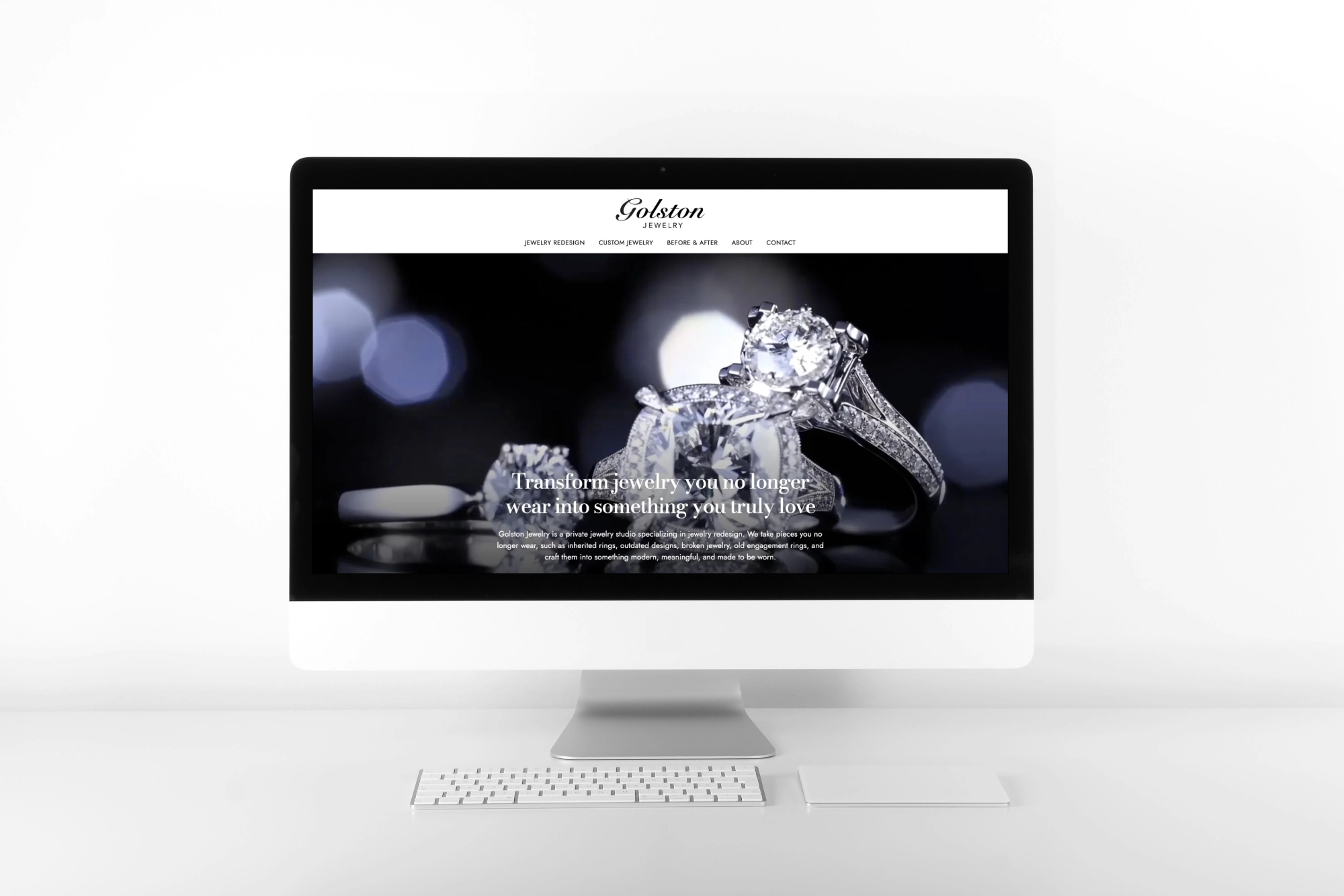
How it started
Golston's website was being handled in-house by a 2-person team. They'd built and rebuilt the site themselves and knew it wasn't doing the business justice. When FAMGO pitched the new homepage design, our client's reaction was simple: they stopped trying to do it themselves and handed the whole project over.
We mention this because it captures something about how these projects actually begin. Rarely with a business that has no website. Usually with someone who has been trying their best with the tools they have, and knows the result doesn't match the quality of the business behind it.
The business problem
Most jewellers sell new pieces to people shopping for jewelry. Golston does something different: they redesign the jewelry people already own.
Their customers are people with a jewelry box full of pieces they never wear. Heirlooms inherited from parents and grandparents. Engagement rings from another era. Gold bought decades ago in styles nobody would wear today. Too meaningful to sell, too dated to wear, so the pieces sit in a drawer.
Golston's service turns them into jewelry the owner will actually wear, keeping the original gold and stones. Because the customer's own materials fund most of the piece, they pay primarily for craftsmanship, not for new gold and gemstones. High-end custom work at a price that surprises people.
It's a compelling offer with one enormous obstacle: it requires more trust than almost any purchase we've designed for. The customer must physically hand over irreplaceable, sentimental items to a company they found online, then wait roughly 60 working days while those items are taken apart and remade. Every design decision on this website exists to answer the question a customer is silently asking: can I trust these people with my grandmother's ring?

Who the site had to convince
Golston's primary North American audience is first-generation Chinese immigrants in the GTA: Markham, Richmond Hill, Scarborough, Mississauga. Predominantly women over 40, often with significant jewelry accumulated over decades, careful with money and deeply skeptical of being sold to. The secondary audiences: fluent-English Chinese-Canadians, and affluent Torontonians of any background with inherited or outdated pieces.
The site launched in English, designed so a Chinese-language version can follow as the brand grows. But the audience shaped everything regardless of language: the imagery, the tone, the complete absence of hard-sell tactics, and the amount of proof offered before anything is asked in return.
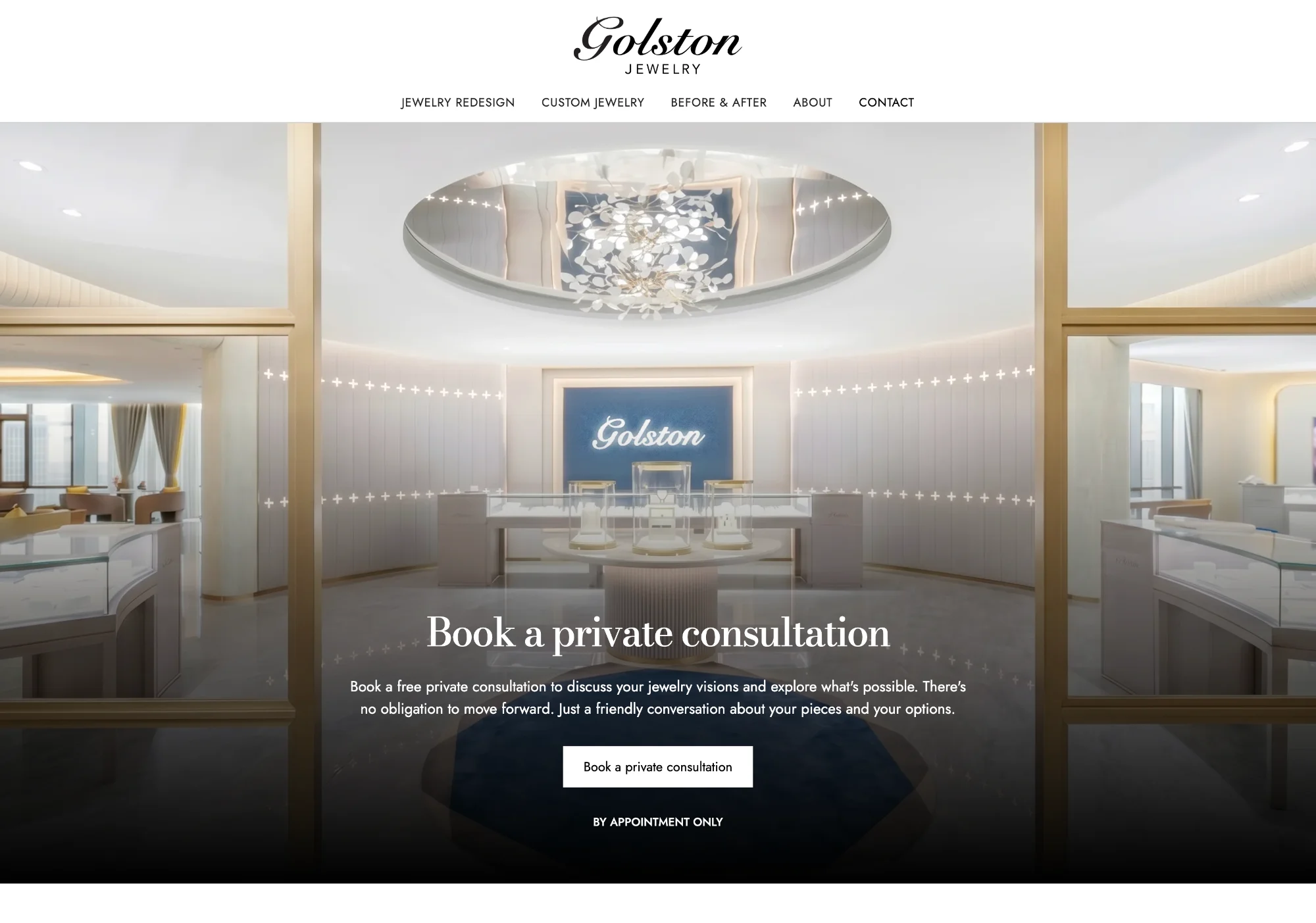
Our design process
We guided Golston Jewelry through FAMGO's human-centred design process, covering web design, UX, local SEO, and conversion rate optimization. Every step was designed to answer the questions customers ask themselves before trusting anyone with their heirlooms.
Brand identity & positioning
Website design & UX
Conversion-focused content
Local SEO & GEO targeting
Analytics & CRO setup
Lead with the transformation, not the brand
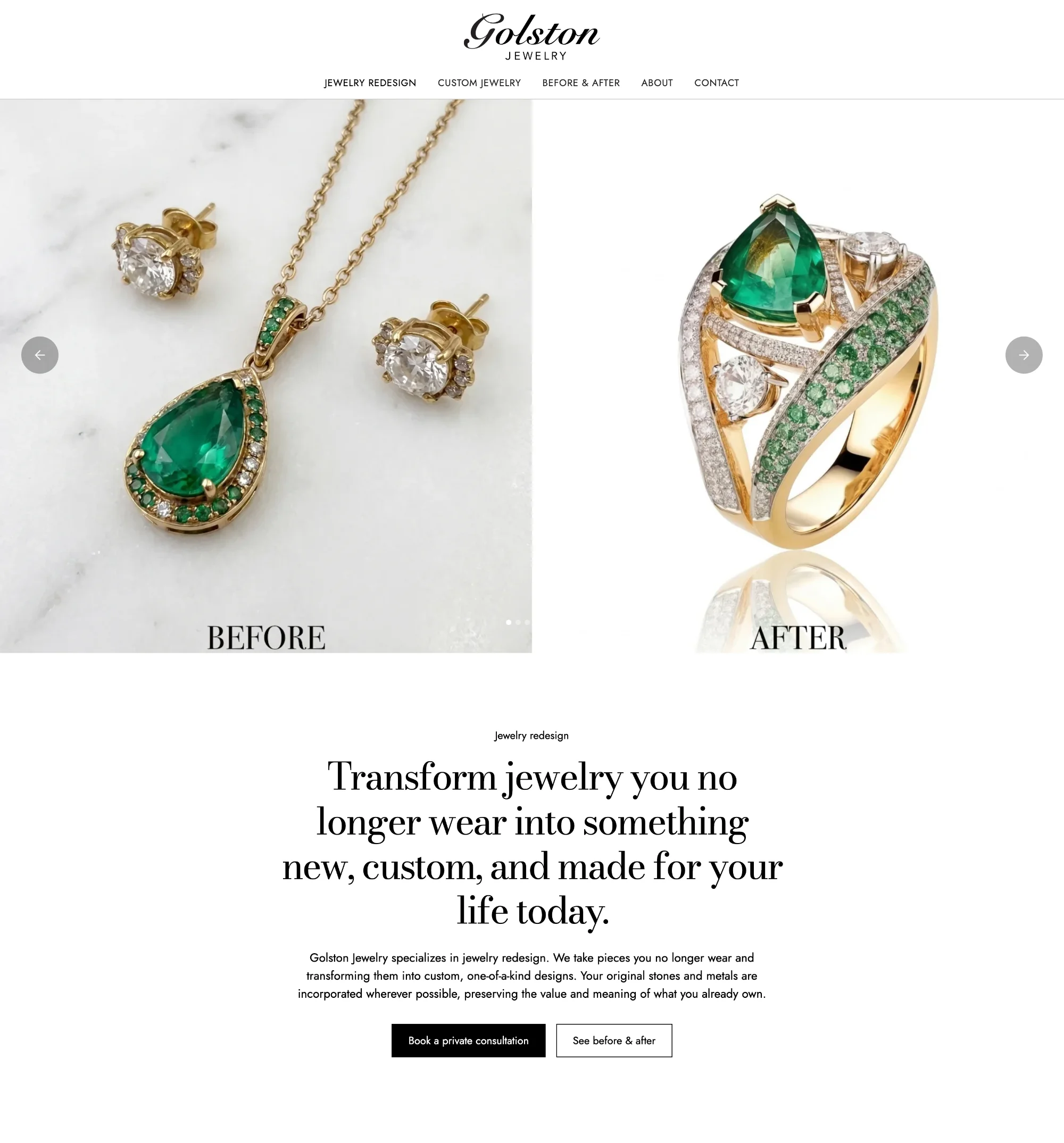
The single most persuasive thing Golston can show is a dated piece next to what it became. So the site leads with before-and-after photography of real redesigned jewelry. No abstract luxury imagery, no brand manifesto. The product is the proof.
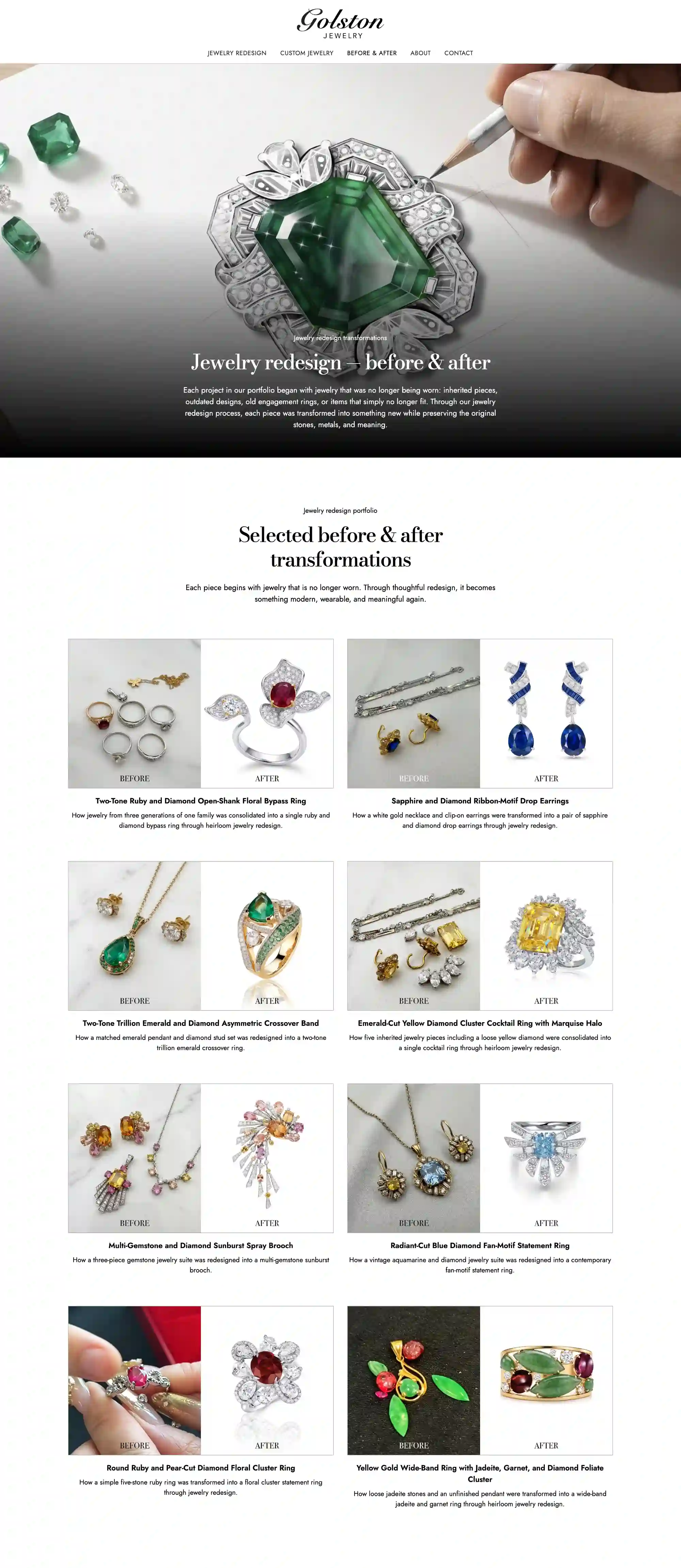
Speak to the jewelry box, not the showroom
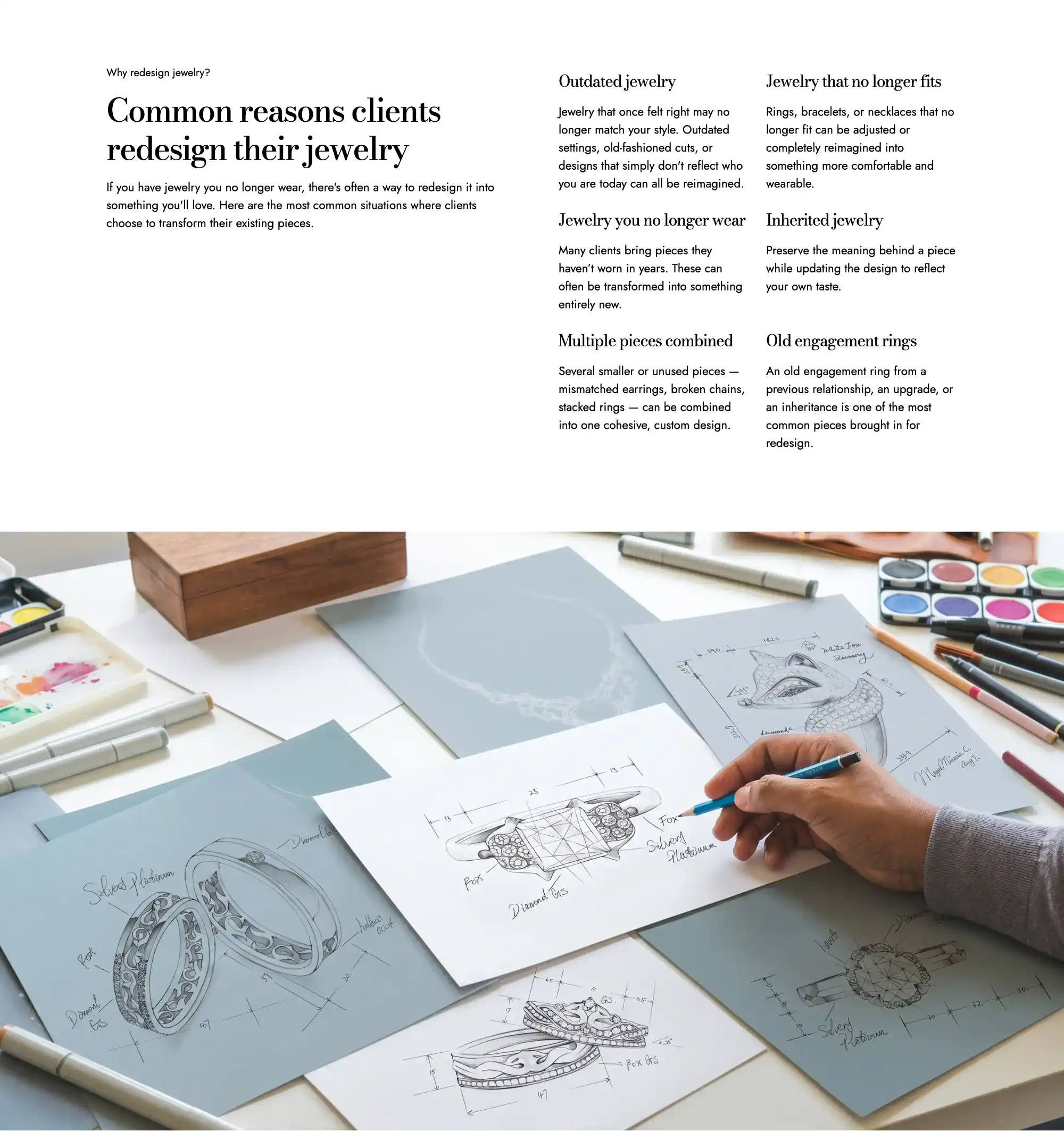
Golston's customer isn't shopping for jewelry. She owns plenty. The copy meets her where she actually is: jewelry she no longer wears because the styles are outdated, the sizes are wrong, or the pieces were inherited from another generation. That's the hook, because it's the exact situation the ideal customer recognizes as her own.
Make the process transparent enough to trust
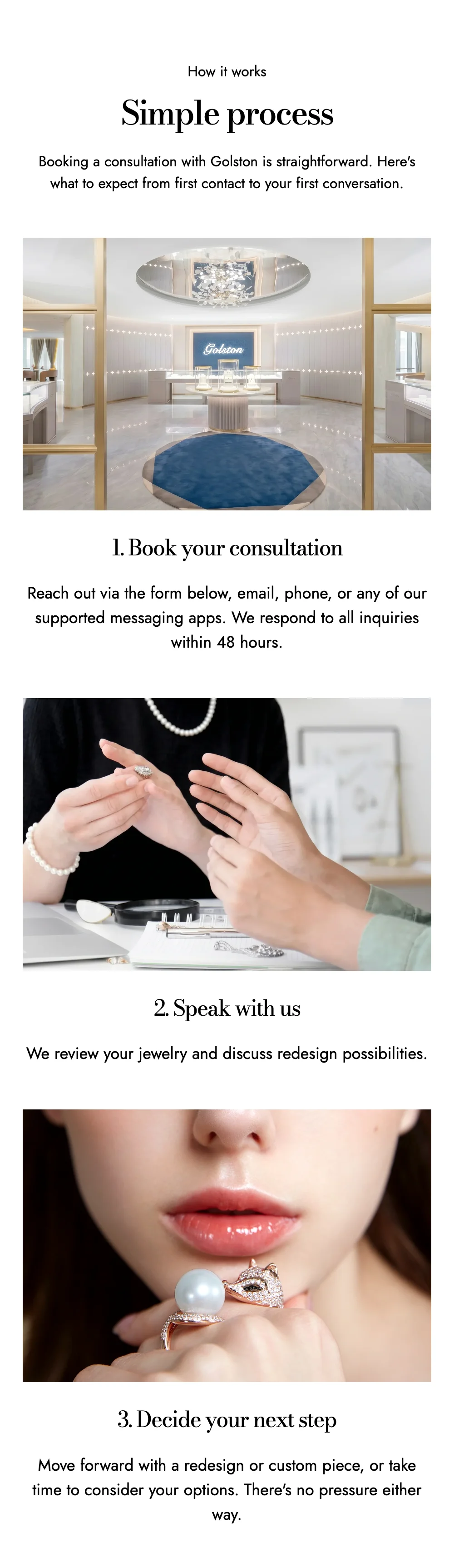
A customer handing over heirlooms needs to know exactly what happens to them. The site walks through every step: consultation, technical verification of the materials (purity examined, an honest trade-in value stated up front), three design drafts to choose from, then production. Even the 60-working-day production time is stated plainly, with the reason: this is delicate, fully custom craftsmanship, and it can't be rushed. Hiding the timeline would win a few impatient inquiries and lose the trust of everyone else.
Answer the objections nobody says out loud
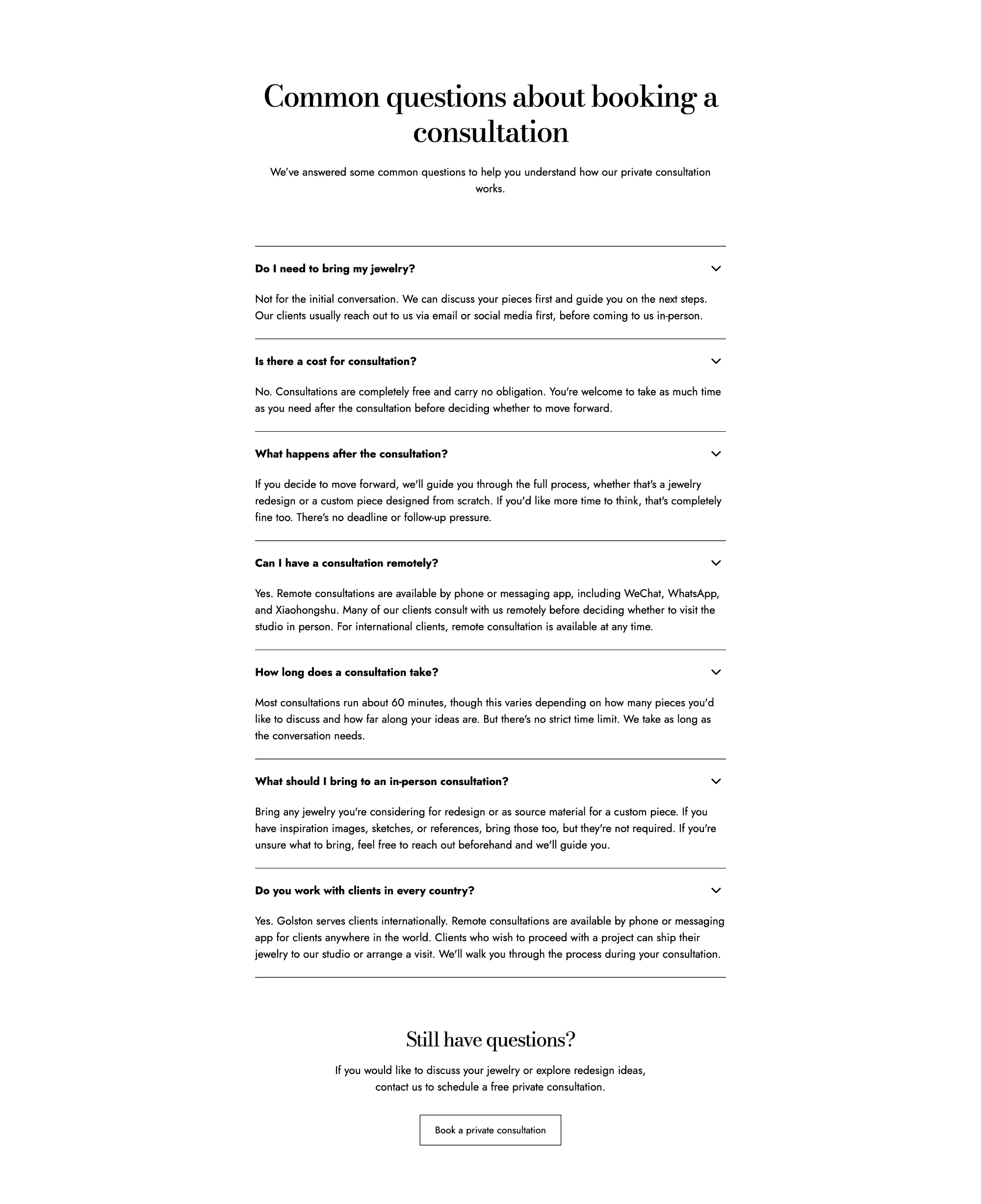
Before contacting any jeweller with an heirloom, a customer is privately asking: Can they actually do what I want? What happens if I don't like the result? Is the trade-in value honest? The FAQ and services pages answer these directly, including the uncomfortable ones, because an unanswered objection doesn't disappear. It just becomes a visitor who never contacts you. These direct answers also make the page more quotable for search and AI assistants.
Certification and craft as closing arguments
Every finished piece comes with certification, and the site makes Golston's two decades of international craftsmanship visible: established 2004, with design roots in Shanghai and Melbourne. For a customer weighing whether this company is real, verifiable history and documented deliverables matter more than adjectives.

A contact path built for a considered decision
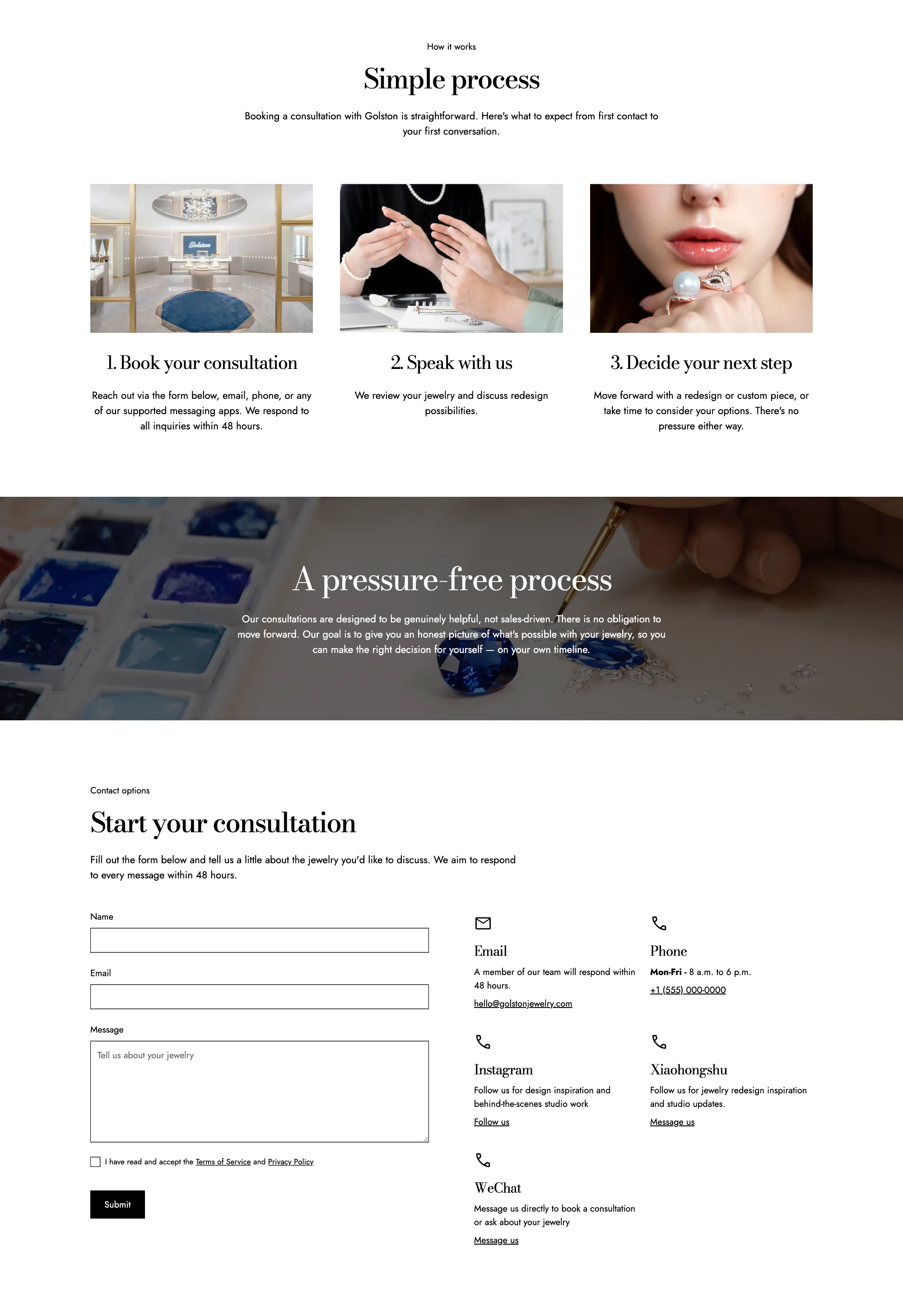
Nobody impulse-buys an heirloom redesign. The contact experience is designed for someone partway through a weeks-long decision: reachable through every channel the customer prefers (WeChat, email, text messages), no pressure, and clear about what happens after they reach out. A consultation, not a sales pitch.
The jewelry website redesign, before & after
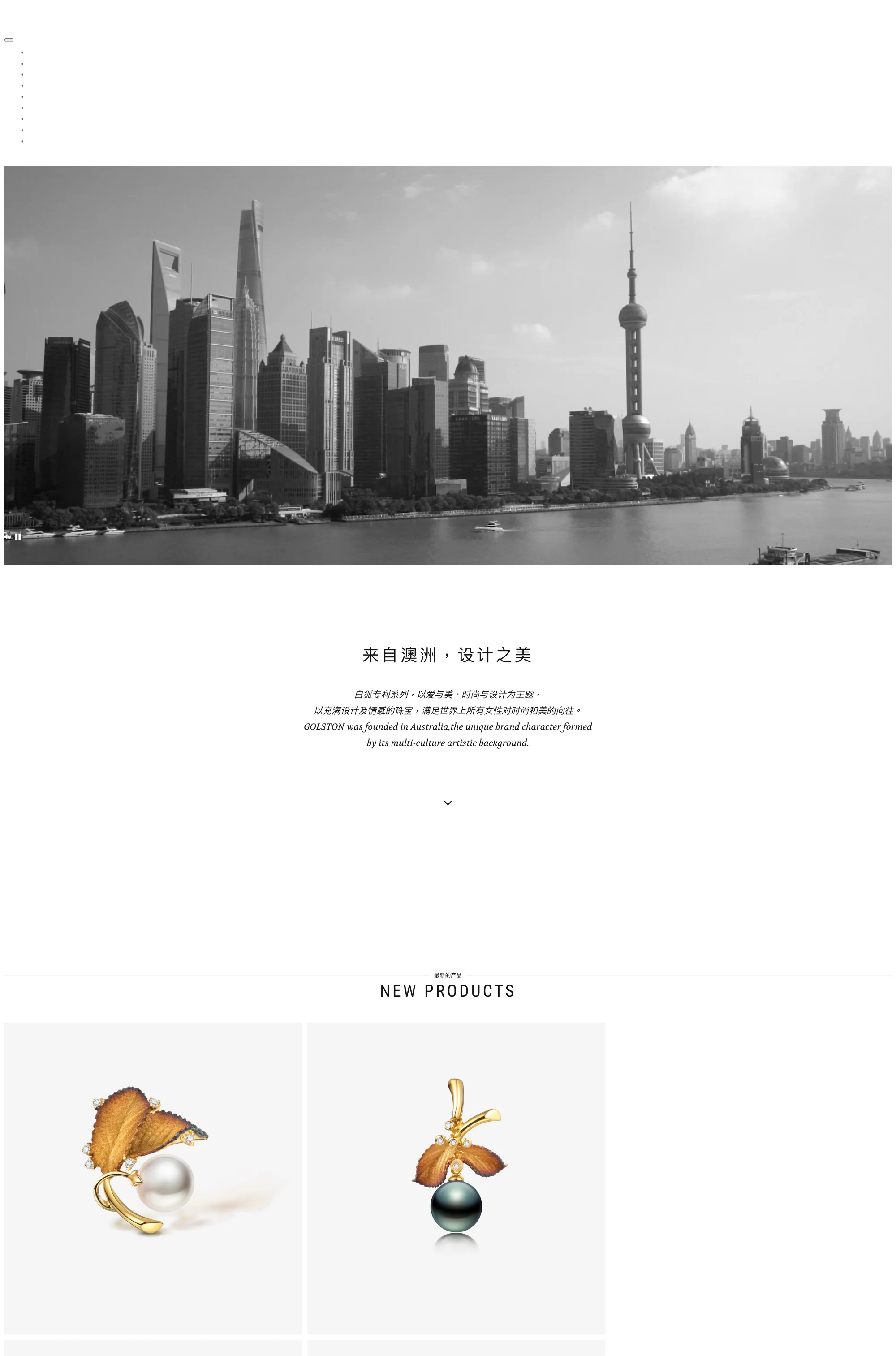
Golston's old website was built in-house with the best of intentions, and it showed. The redesign rebuilt the site around a single job: earning enough trust that a customer will hand over grandmother's ring to a jeweller they found online. Same business, same craftsmanship. A website that finally communicates both.
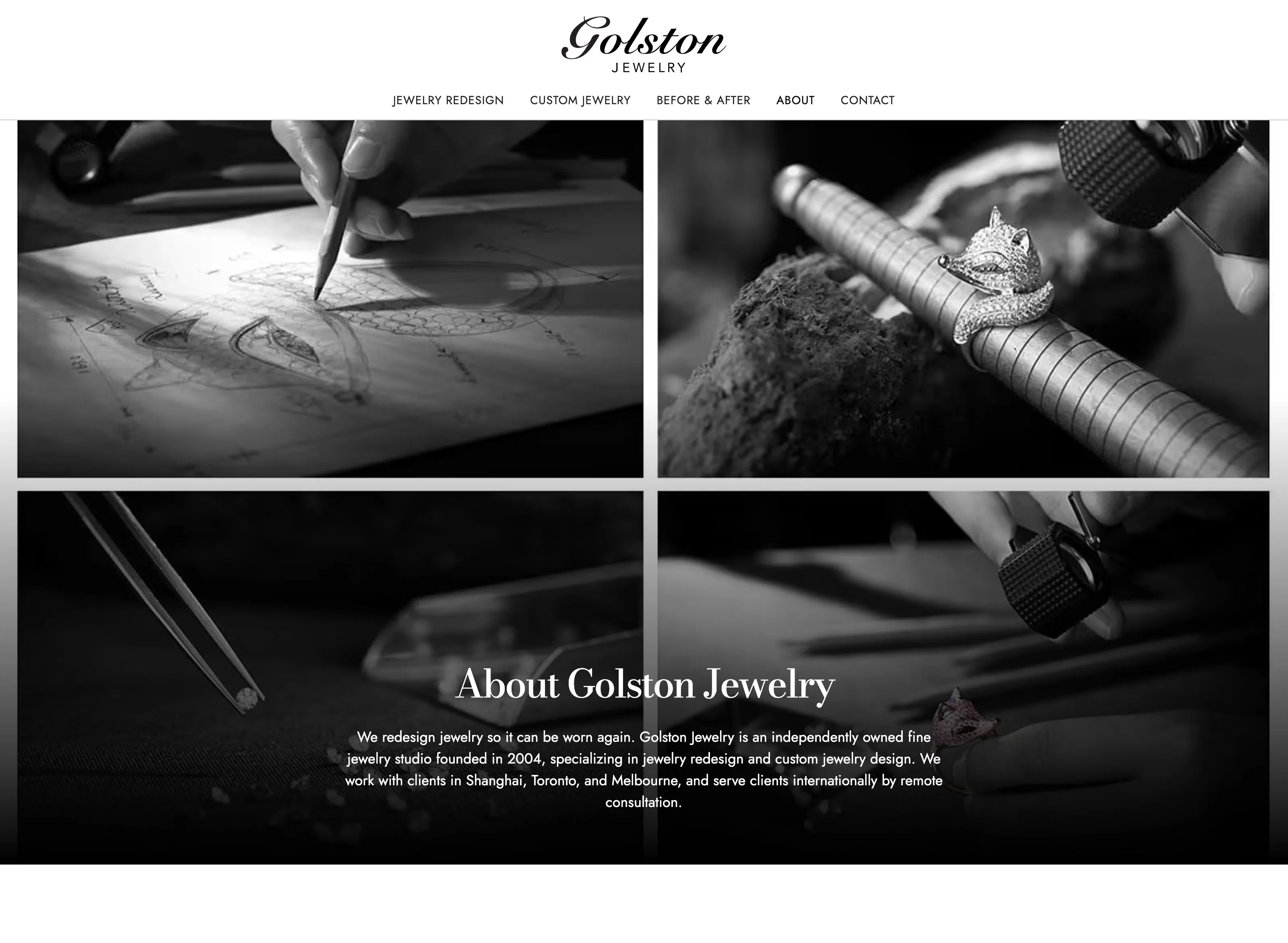
Results
The redesigned site launched in June, 2026. We only publish verified results from named clients, so this section will grow as the data does. That's how we handle every case study in our work.
Who the project is for
Case studies are only useful if they map to your situation. This one is worth your time if any of these sound like you. This case study is less relevant if you need a high-volume e-commerce store or the cheapest possible template site. That's not what this project was, and honestly, it's not what we do.
You sell something that requires real trust before purchase.
Jewellers, obviously, but the same design logic applies to clinics, law firms, financial advisors, and anyone whose customer thinks hard and researches carefully before reaching out. If your buyer's silent question is "can I trust these people," this is how a website answers it. Our web design service is built around exactly this.
You're entering a new market.
Golston is an established brand that needed to introduce itself to customers who had never heard of it. If you're expanding into Canada, into a new city, or into a new customer segment, the trust problem is the same: nobody knows you yet, and your website has to do the introducing.
You serve a specific cultural community.
This site was designed for the GTA's Chinese diaspora, an audience with its own platforms, expectations, and skepticism. If your customers are a specific community rather than "everyone," design decisions change, and most agencies don't know that.
You've been doing the website yourself.
Golston's site was maintained in-house by someone smart and motivated who wasn't a designer. If that's you, no judgment; it's how most of our projects start.
Visual highlights
A visual walkthrough of the Golston Jewelry website, showcasing its fine luxury, responsive layout, and conversion-driven details.




The things you're probably
already wondering.
If you’re considering a conversion-focused website, you probably have questions about cost, timelines, and what the process looks like. Here are some of the most common questions we hear from business owners.
A redesigned website launching Golston's heirloom and vintage jewelry redesign service in North America, built on Webflow and designed around trust: transparent process, before-and-after proof, certification, and direct answers to customer objections.
Remaking jewelry a customer already owns, inherited pieces, outdated styles, unworn gold, into new custom pieces that reuse the original materials. Customers pay primarily for craftsmanship rather than new gold and gemstones.
Because the purchase requires unusual trust: customers hand over irreplaceable, sentimental items. The website has to answer objections, prove the process, and demonstrate craftsmanship before asking for contact.
Nine weeks from kickoff to launch.
For most service businesses, Webflow is the better choice in 2026. WordPress depends on third-party plugins that add code, require regular maintenance, and are a common source of security and performance problems, often needing several hours of upkeep each month. Webflow produces fast, secure, fully custom sites with hosting and security handled by the platform, and it lets you edit your own content without a developer. WordPress still suits content-heavy publishers that need its plugin ecosystem, but for a clinic, firm, or service business that wants a fast, low-maintenance site that ranks, Webflow wins. FAMGO builds exclusively on Webflow.
Conversion-focused web design means designing a website to turn visitors into leads and customers, not just to look attractive. It uses clear messaging, obvious calls to action, trust signals like reviews and real results, and a structure built around how customers decide. The goal is measurable: more inquiries, calls, and bookings. FAMGO guarantees a minimum 20% improvement on your key metric, or we work for free until we deliver it.
A new build creates a site from scratch, for when there's no existing site or the current one is beyond saving. A redesign rebuilds and improves an existing site, keeping what works. Both can transform results: our new build for Genesis Health Clinic grew organic traffic by 179.89%, while our redesign for the Chinese Association of Mississauga grew website visits by 228%. We recommend whichever fits after reviewing your current site.
Most professional websites take a few weeks to a few months, depending on the number of pages, design complexity, and how quickly content and feedback come together. Because your project is handled directly by senior designers rather than passed down a chain, it often moves faster than a traditional agency timeline. You get a clear schedule with checkpoints at the start.
Yes. FAMGO is based in Toronto and works across the GTA, including Richmond Hill and Markham, plus the rest of Canada, the United States, Taiwan, and China. We design in both English and Chinese, which makes us a strong fit for businesses serving multilingual or Chinese-speaking communities..
Still have questions?
If you’re unsure which package is right for you or want to talk through your needs, feel free to reach out!
What this means for your business
If your business asks customers for significant trust before they buy, your website's real job isn't to look expensive. It's to answer every doubt a careful customer has, in the order they have them. That's the work we did for Golston, and it's the work we do for every client.


