
A bilingual website rebuild for a Chinese community organization in Mississauga
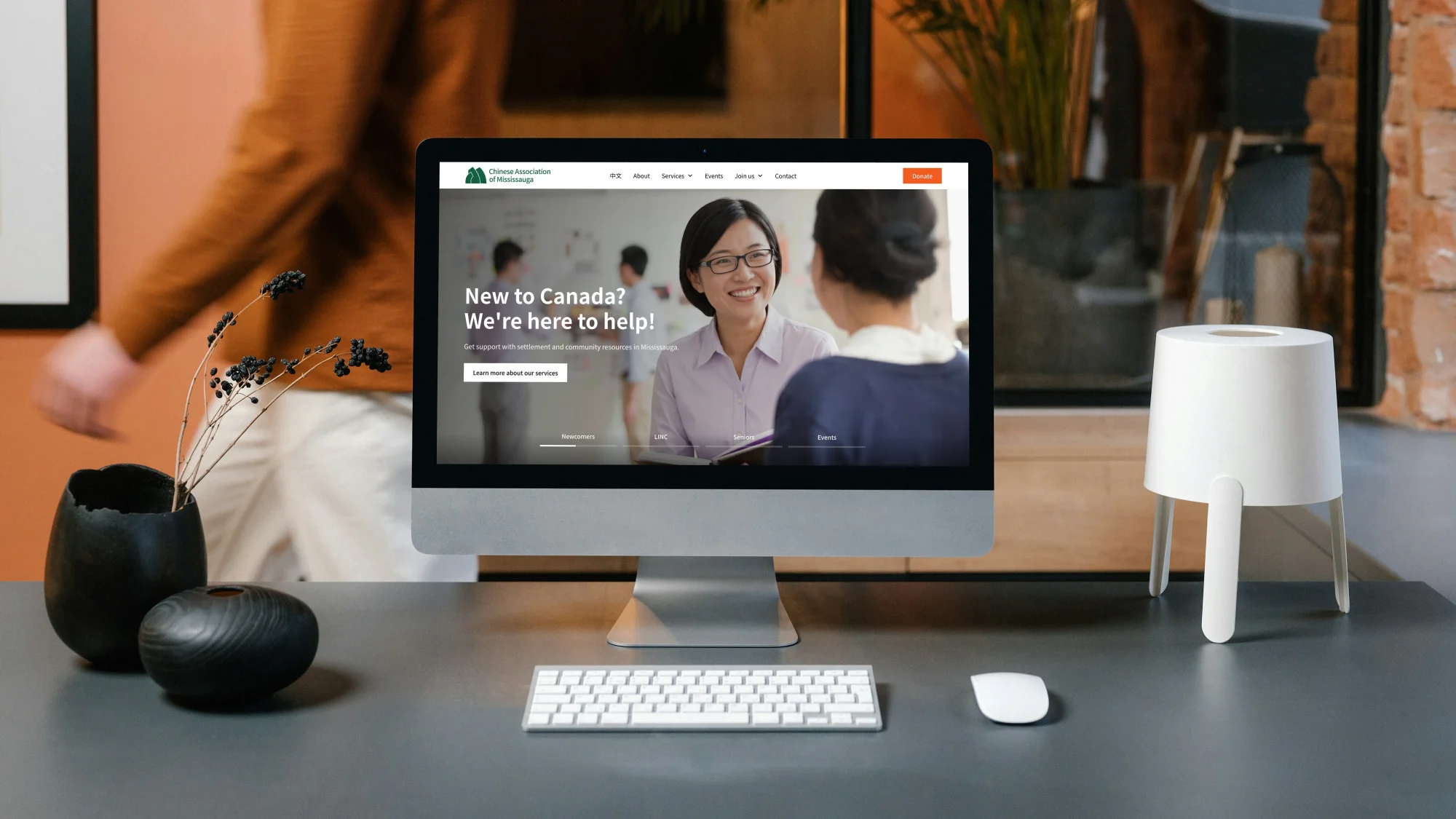
The Chinese Association of Mississauga needed a website that serves newcomers, seniors, families, and community partners in both English and Simplified Chinese, and that a small nonprofit team can keep current without calling a developer.
What was wrong with the old site?
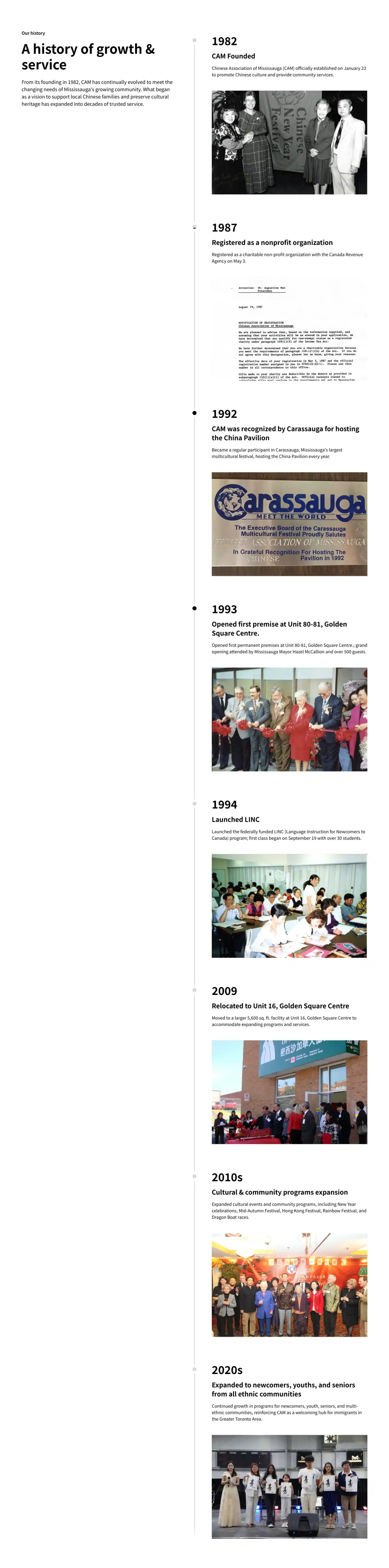
CAM has served Mississauga's Chinese community since 1982. It became a registered charity in 1987, opened its own premises in 1993 with the mayor in attendance, and has spent the decades since running festivals, English classes, seniors programs, and settlement services funded by Immigration, Refugees and Citizenship Canada and the Government of Ontario.
Its website had been built years earlier on WordPress by an outside vendor, and three problems had compounded since.
⚠️ The staff could not update it. This was the first problem the staff raised. Program details went stale because changing them required someone who no longer worked with the organization.
⚠️ Services were hard to find. Someone who arrived in Canada last month and needs free English classes could not easily work out what existed or whether they qualified.
⚠️ Program information was split across 2 separate places on the site, so visitors had to assemble it themselves. There was no online registration at all.
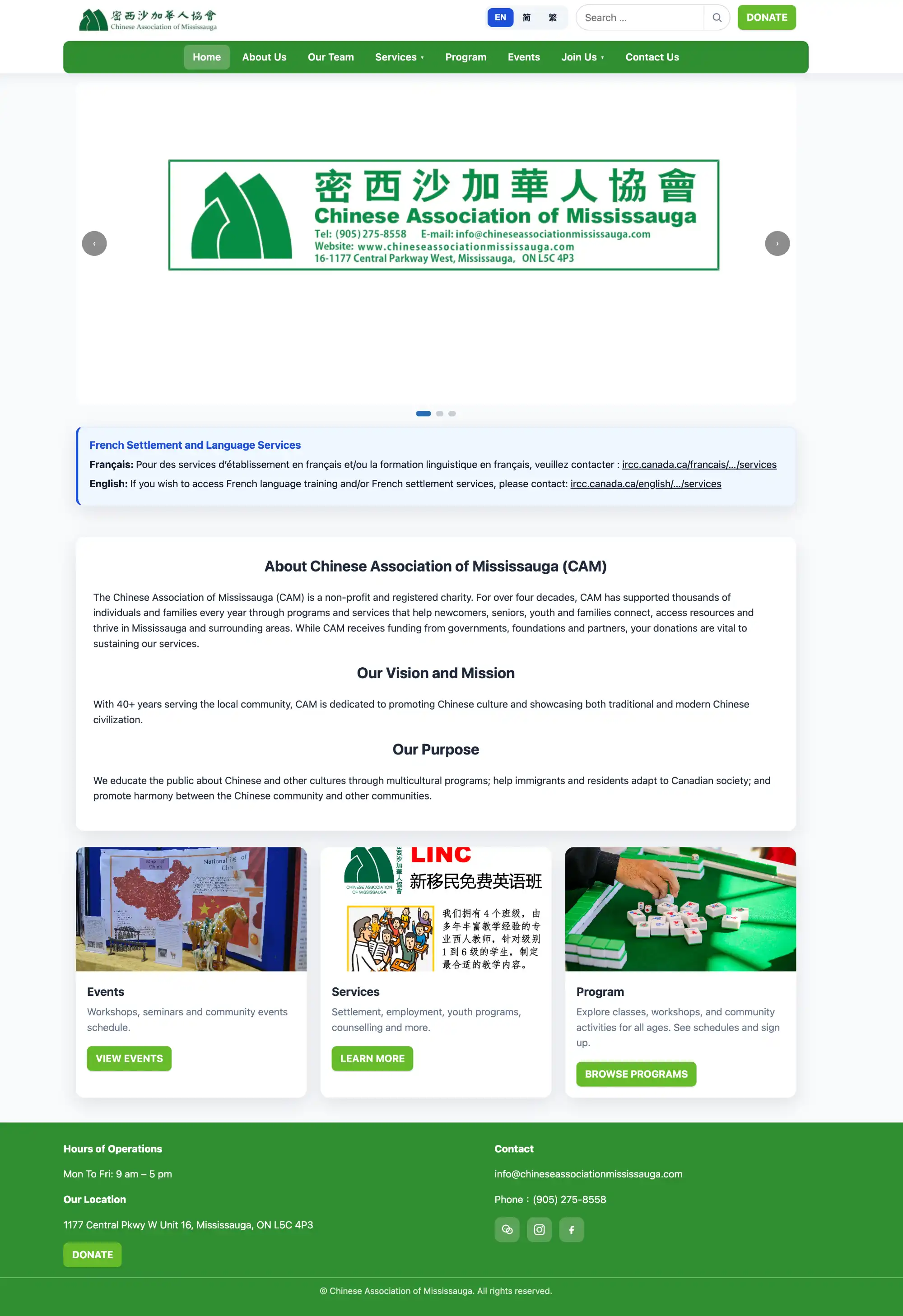
Old homepage of Chinese Association of Mississauga, before redesign.
What we changed
The rebuild came down to 3 decisions: how the 2 languages would work, what the homepage would lead with, and what the staff could realistically maintain after we left.
English and Simplified Chinese, built properly
CAM's members speak Mandarin, Cantonese, and English in varying combinations. A translation plugin would have been the cheap answer and the wrong one.
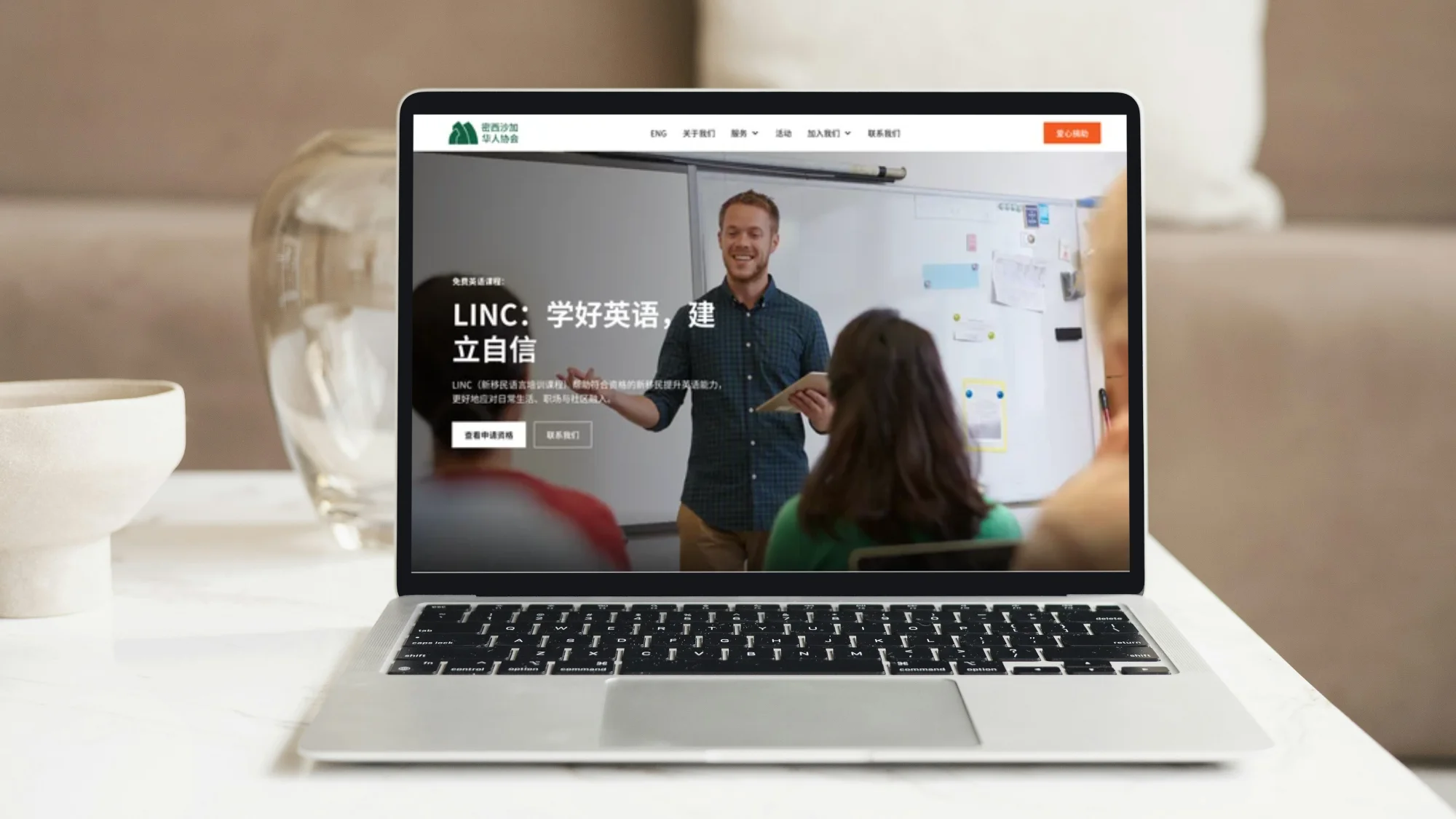
The site runs as 2 properly structured versions, with Chinese content on its own /zh/ paths and the language relationship declared in the site's structured data so search engines can understand which version is intended for which language. The Chinese copy is written for its audience rather than machine-translated, which matters at a settlement organization where the wording of an eligibility rule has to be unambiguous.
We dropped Traditional Chinese. The demand was not there, and a third language would have meant permanent extra work for a staff of a few people. Cutting it made the project sound smaller and made the website better.
FAMGO writes and builds in English and Simplified Chinese natively, which is why Chinese community organizations, businesses, clinics, and churches come to us for nonprofit website design.


Services first, history second
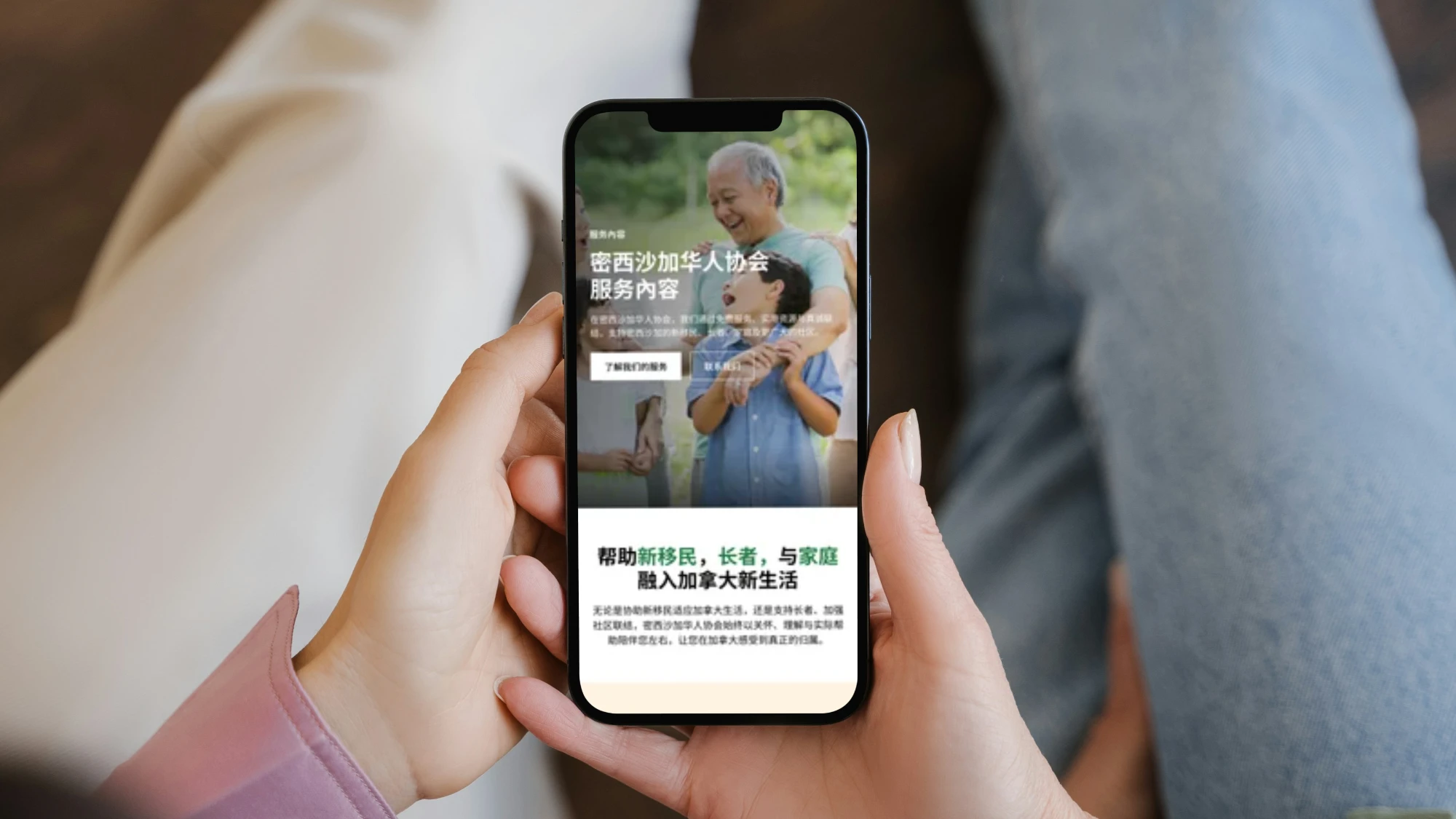
We put settlement and community services in the primary position and moved the leadership story to the About page.
CAM's website had 3 jobs competing for the same space: establish credibility with funders and partners, help people find services, and keep program information current. Give all 3 equal weight on a homepage and none of them wins.
Services took the front because there is no standing without strong services. An organization's reputation is built by what it does for people, so the site should open with what it does for people. Someone looking for free language training should not scroll past a founding history to find it.
The history did not lose out. It got a better home. On the About page CAM's decades run as a milestone timeline: the 1982 founding, charity registration in 1987, the 1993 opening of its own building, photographs with former mayors and members of parliament. Given a page of its own, that story lands harder than it could beside a services menu.
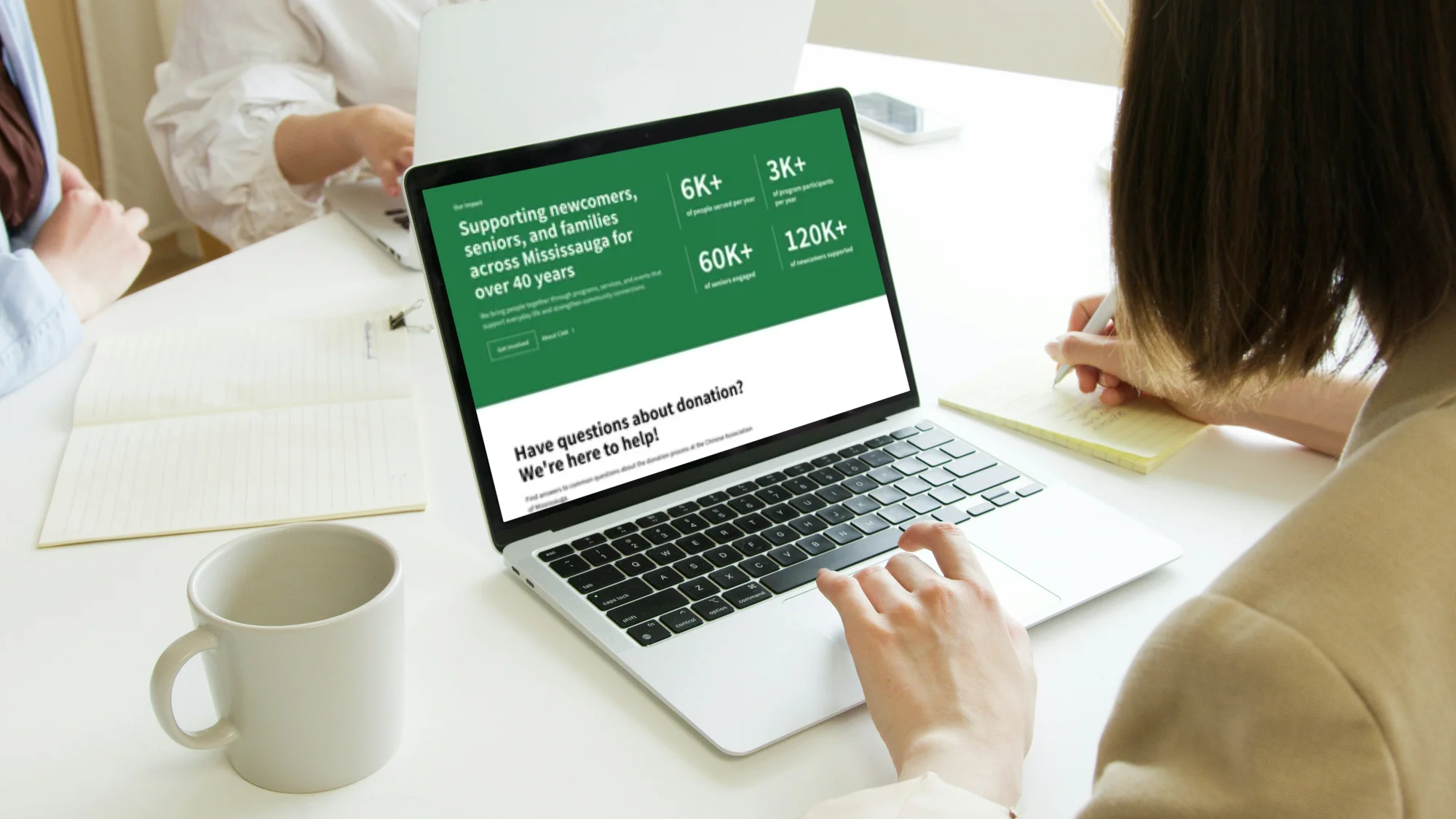
The credibility signals moved with it and got stronger for having room. The homepage carries CAM's mission below the hero, a section describing the scale of its work each year, and a row of logos showing the government departments that fund its programs. Government program funding is competitive, and organizations do not receive it casually.
Built for the people who have to run it
Every decision was tested against one question: can CAM manage this in 3 years without paying a specialist every time something changes?
The CMS. Rebuilt from scratch in Webflow. Programs and events are managed through Webflow's CMS, which non-technical staff can learn in an afternoon. We ran just over an hour of training and recorded it, so the next coordinator or volunteer does not depend on being trained in person by the last one.
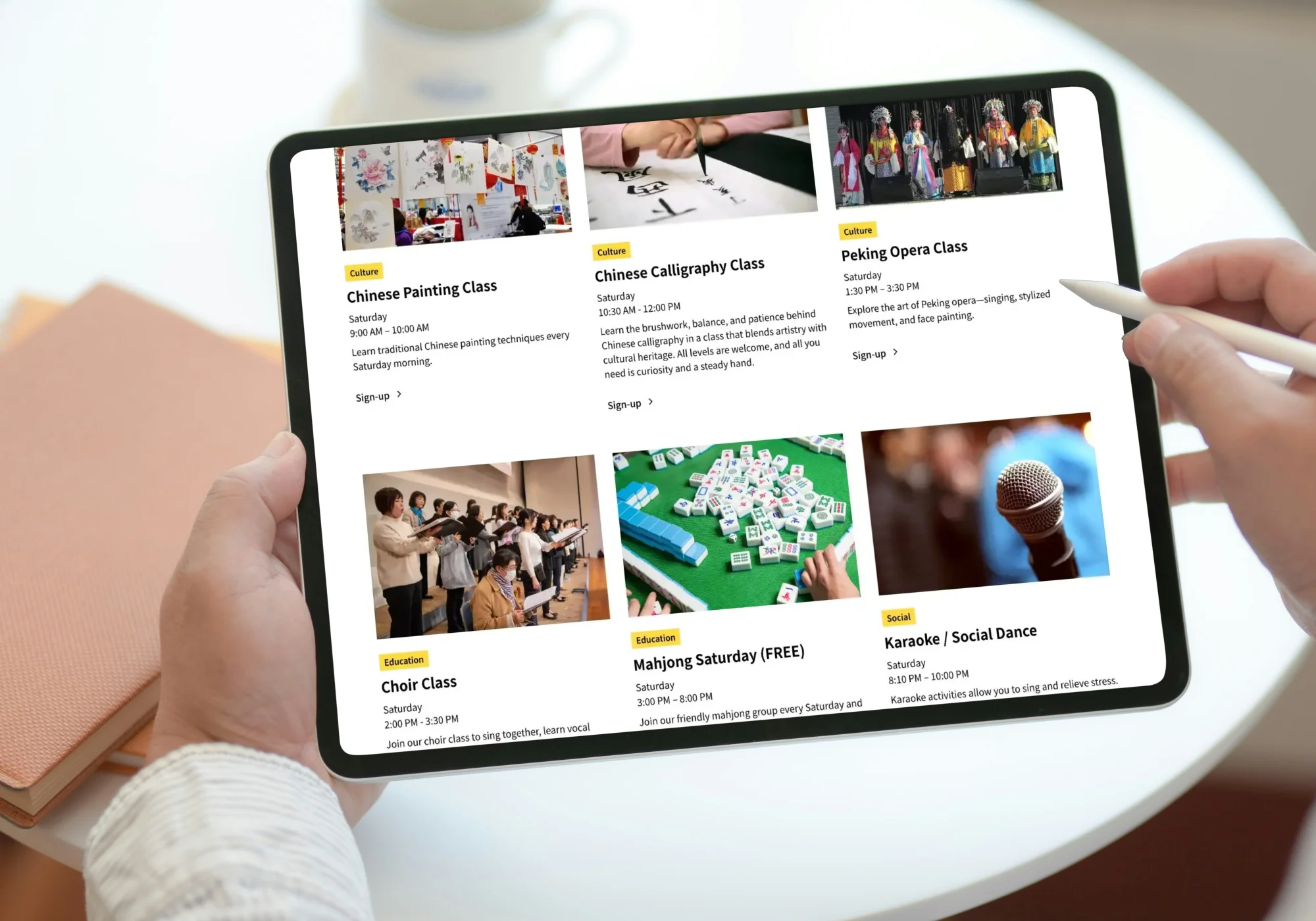
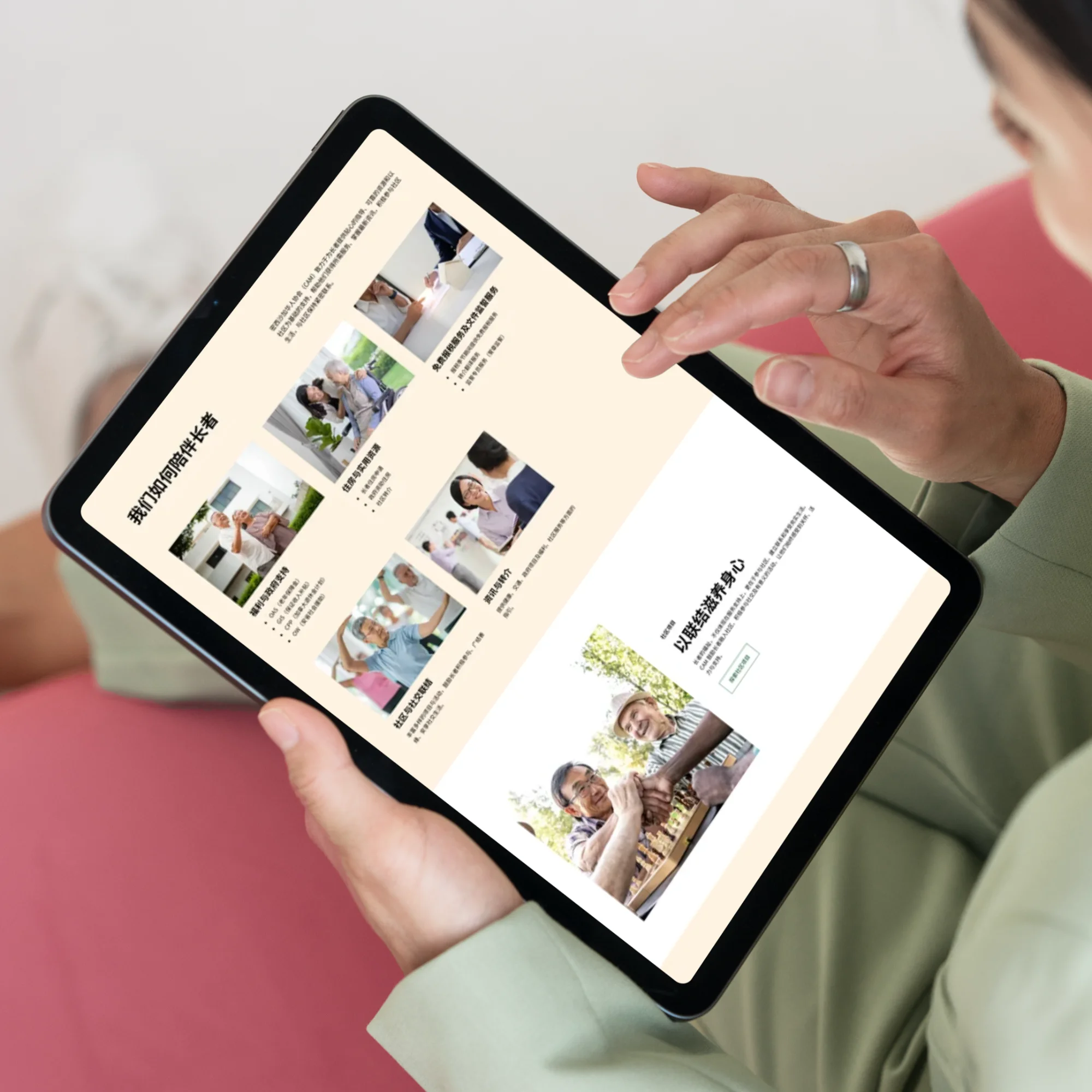
Programs by day of the week. Each program now lives in one entry with its description, time, and registration link together, organized as a weekly list rather than a calendar. Scheduling plugins cost money to license and maintain, they are often poor on small screens, and CAM does not run enough concurrent programs to need one. A weekly list does the job without another licence to renew, and it works on a phone.
Registration through tools CAM already runs. Program and event pages link to Google Forms the CAM team built themselves. We could have specified something more sophisticated. We did not, because CAM would have paid a monthly fee for it indefinitely, and because the staff already know how to build and read a Google Form. A system a nonprofit cannot afford in year 3 is not a solution, it is a deferred problem.
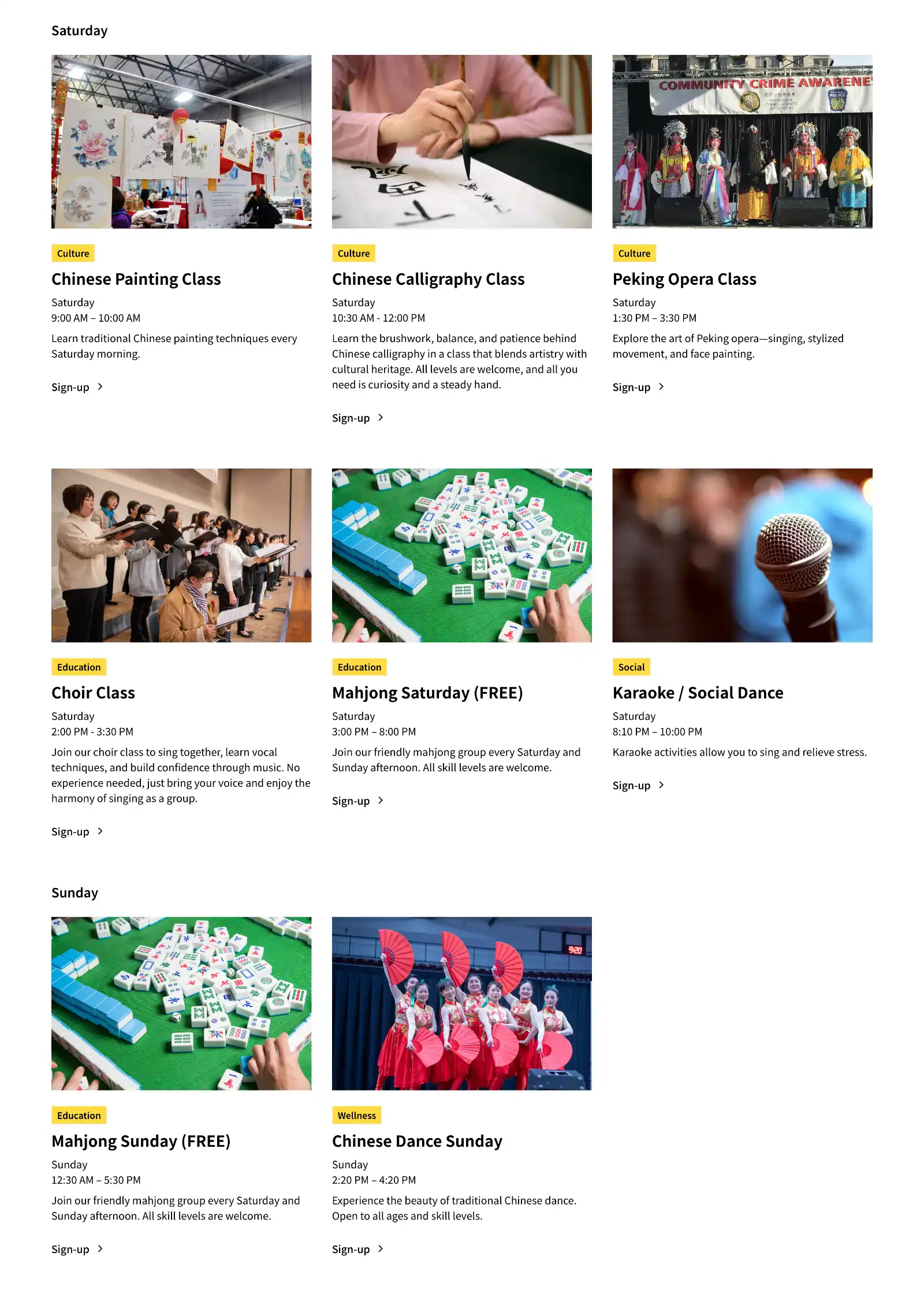
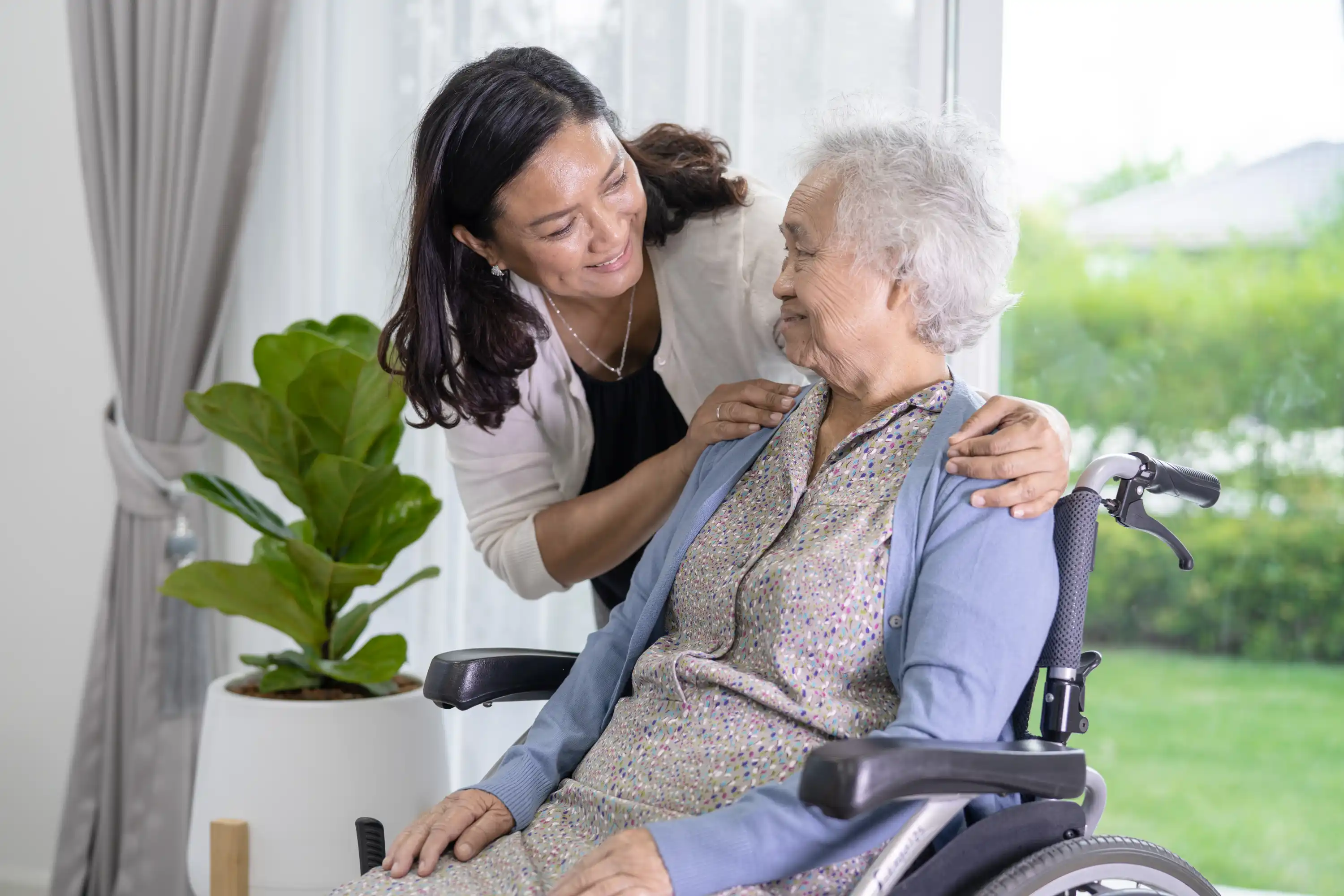
Phone, WeChat, email, and walk-in stay prominent. For a large share of CAM's membership these are not fallbacks, they are the primary channel. Many members are seniors who will not use an online form, and designing them toward one would have made their experience worse.
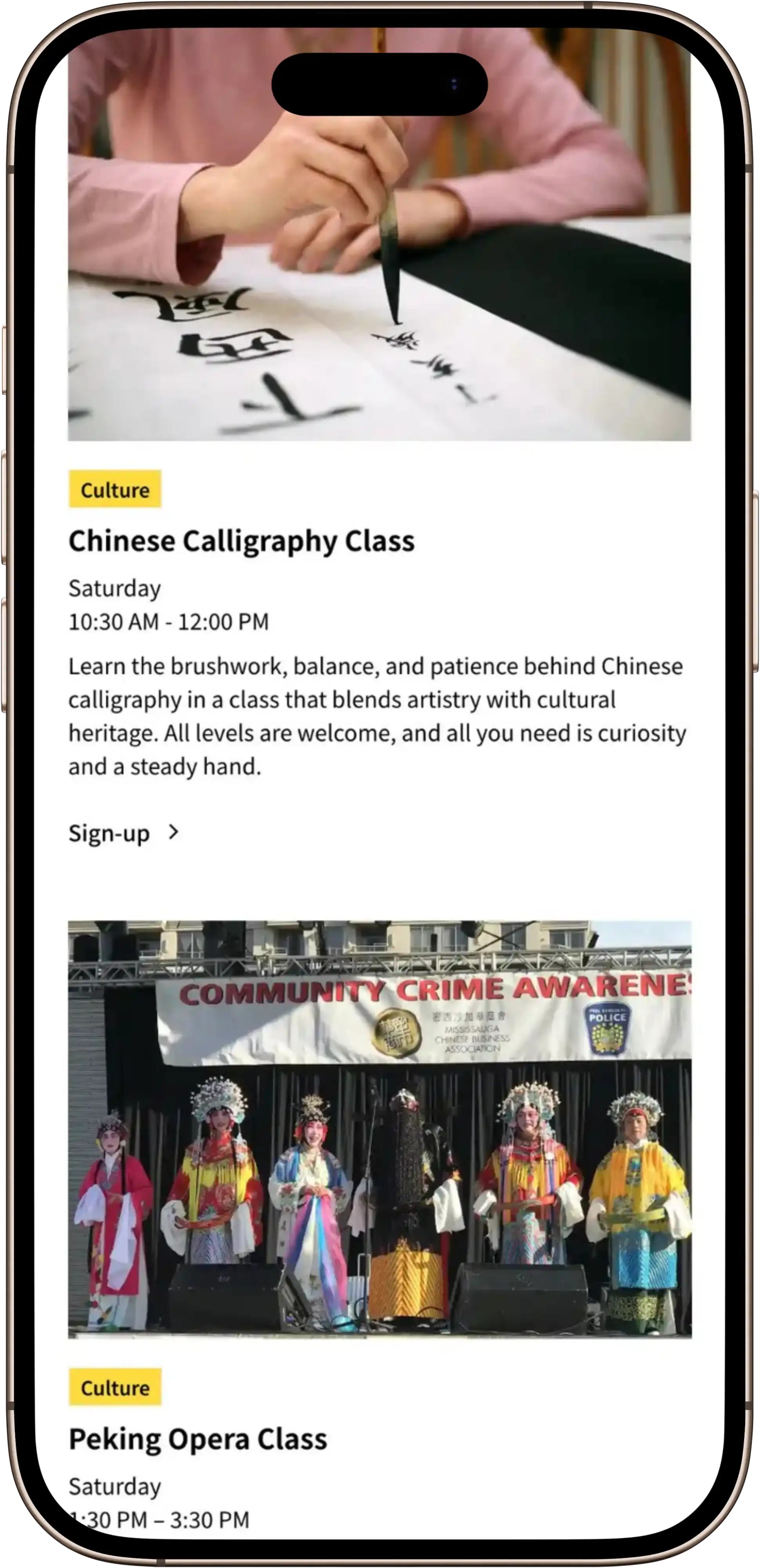
The rest of the build
Each service page states what the service is, who benefits, who is eligible, and how to get help. Those 4 questions come straight from what the settlement staff answer on the phone all day, with FAQ sections below where a service generates recurring follow-ups.
The navigation was cut back and the sitemap rebuilt. The events page shows the 9 most recent events with older ones paginated rather than deleted, because someone deciding whether to attend this year's Mid-Autumn Festival wants to see last year's. A festival photo gallery sits below. A sponsor and partner section, headed "Working together with community partners," gives CAM something concrete to show a prospective supporter.
Program information moved off PDFs and onto real web pages, so it is searchable, linkable, and editable. Images are optimized, with even the largest under 200 KB. Webflow handles hosting and security, so CAM does not have to maintain a collection of WordPress plugins. The site was built to WCAG 2.0 Level AA, which matters for an audience that skews older. Local SEO and AEO were structured in from the start. A newsletter signup gives CAM a direct channel it did not have.
Before and after
The old site was not a failure of effort. It was a website built years ago that CAM had outgrown and could no longer change. The rebuild kept what was working, the core information, the contact details, the event announcements, and gave it a structure the staff can maintain and visitors can navigate.
What we did not solve
The most common question CAM's program staff field is whether a class is full. This website does not answer it.
Live capacity tracking needs a paid registration system talking to the site in real time, plus a workflow every staff member follows perfectly. At an organization where a large share of registrations still arrive by phone, the displayed number would be wrong often enough to be worse than no number at all. If online signups become the majority, this is worth revisiting. Today it would mean spending a nonprofit's money on something that would not work.
Results
The redesigned site launched in September, 2026. Performance data will be added to this page once the site has been live long enough to measure. We do not publish figures we have not verified. That's how we handle every case study in our work.
Who the project is for
Case studies are only useful if they map to your situation. This one is worth your time if any of the following sounds familiar.
This case study is less relevant if you need an e-commerce store, a booking-heavy platform, or the cheapest template a vendor will sell you. That is not what this project was, and it is not what we do.
Your website is maintained by people whose job is not websites.
Someone capable but untrained keeps the site alive and it drifts further from reality every year. The fix is not a more beautiful website, it is one they can actually change.
Your budget has to last.
If a solution needs a subscription your organization may not be able to renew, it is not a solution.
Your audience includes people who will not use a web form.
Seniors, recent arrivals, anyone more comfortable on the phone or on WeChat. Designing for them does not mean designing badly for everyone else, but it does mean the obvious answer is usually wrong.
You serve a Chinese-speaking community.
CAM's members speak Mandarin and Cantonese, find the organization through WeChat groups and word of mouth, and have expectations a generic community website will not meet. We write and build in English and Simplified Chinese natively.
Visual highlights
A walkthrough of the new site in English and Simplified Chinese, including the weekly programs list, the seniors and settlement service pages, and the mobile views.


Thinking about a similar project?
If you're considering a rebuild for your organization, you probably have questions about cost, timelines, and how the process works. These are the ones we hear most often from nonprofits.
FAMGO projects start at CA$5,000. Larger bilingual nonprofit sites with more content types and functionality can exceed CA$20,000. We give a fixed project price before work begins, so there is no hourly meter running.
Our production time is usually under 8 weeks. Total project time can be longer when content, feedback, or board and committee approvals take additional time. The single biggest thing an organization can do to shorten a project is decide in advance who approves content and how quickly.
Yes, and it is one of the main reasons we build in Webflow. Programs, events, and page content are edited through the Webflow CMS, which non-technical staff can learn in about an hour. We include training and record it so future staff and volunteers can use it.
Yes. FAMGO is a Toronto web design agency that works natively in English and Simplified Chinese, so Chinese content is written for its audience rather than machine-translated. We build the 2 versions as properly structured separate paths rather than using a translation plugin.
We do, with one condition: we design for what the organization can sustain. That means avoiding tools with recurring licence fees where a simpler approach works, using platforms the staff already know, and building on Webflow so there are no plugins to maintain. If a nonprofit cannot afford to run the website in year 3, it was designed wrong.
Maintenance. A WordPress site accumulates plugins that need updating, and if nobody on staff is technical, updates get skipped and the site becomes fragile. Webflow includes hosting, security, and a CMS non-technical staff can use, which removes most of that ongoing burden. Our website redesign process covers the migration.
Still have questions?
If you’re unsure which package is right for you or want to talk through your needs, feel free to reach out!
What this means for your organization
FAMGO Design is a Toronto-based web design agency working with nonprofits, clinics, churches, and professional services firms across the GTA, in English and Simplified Chinese.
If your organization serves a Chinese-speaking community and your website is holding your staff back, let us look at it. The free audit covers what is working, what is getting in the way, and what we would change.


